
America, an imperialist conqueror? Balancing expansion with domestic responsibilities
As America quickly begins to expand its control over the Western Hemisphere, the survival of the United States will depend on balancing domestic maintenance with the frontier spirit
Opinion-editorial by Summer Lane | January 16, 2026
The Monroe Doctrine, a core tenet of U.S. foreign policy for many years, has become far more than a mere relic of ages past.
Embraced heartily by the Trump administration, America has suddenly pivoted from domestic stagnation to aggressive expansionism, signaled by the United States’ rapid takedown of Venezuela, the seizure of the world’s biggest oil reserves, and the effective securement of the Caribbean and Gulf.
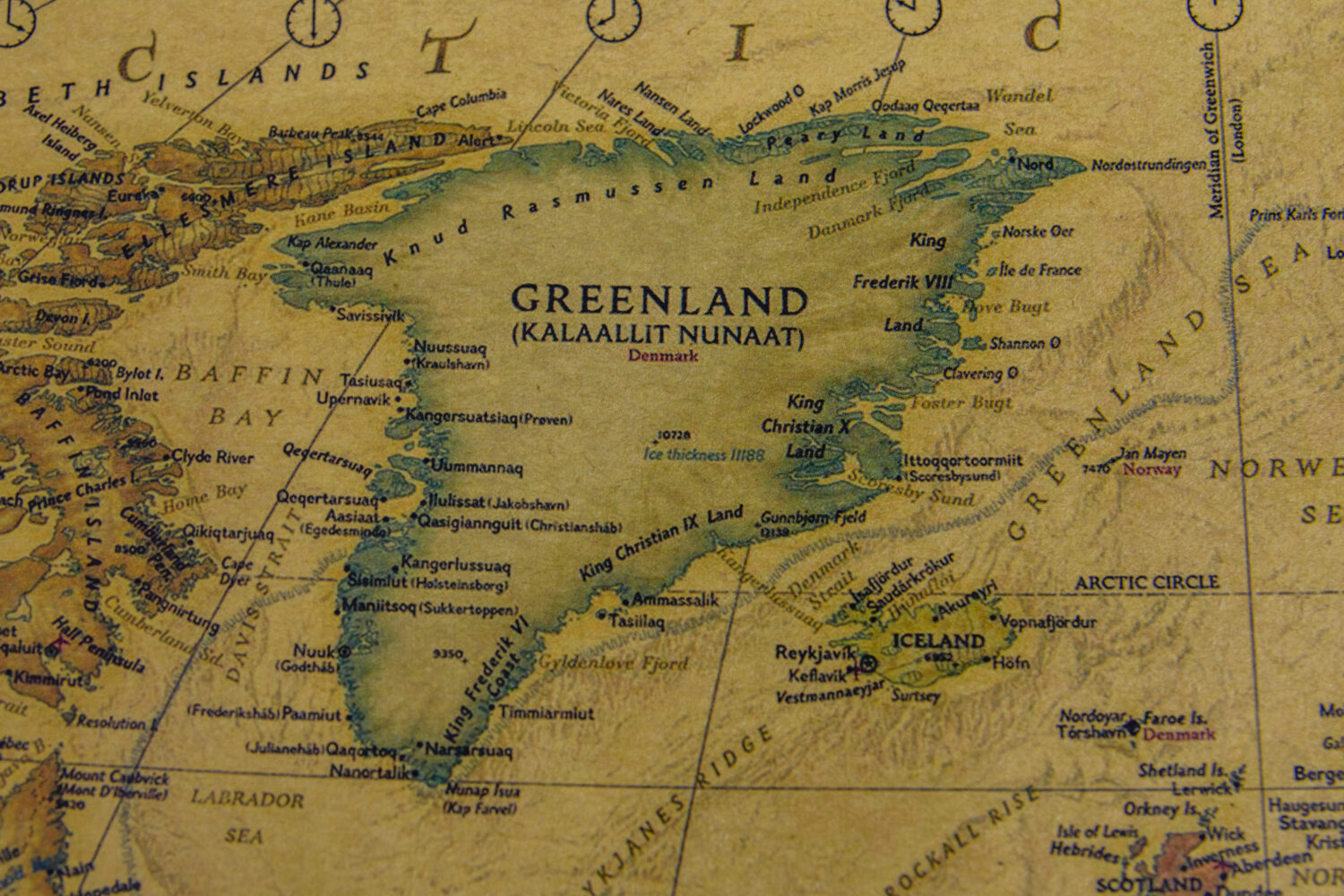
And now, the president has set his sights on acquiring Greenland – a treasure trove of critical resources and rare earth minerals, its geographic location is also unbeatable: on the cusp of key shipping routes and a future Transpolar shipping corridor, it has become suddenly apparent that, in an evolving age of blatant imperialism, Greenland is fair game.
And why shouldn’t it be? In this new age, as China and Russia both loom dangerously as superpowers on the world stage, the United States cannot afford to cede resources or territory to what could be a devastating allied bloc between Asia and Europe, should a world war arise.
And yet, there is nothing wrong with pausing, or with taking stock of the situation before diving in headfirst.
The world has entered a new age. With the sudden aggression and frontier-style push from the United States, NATO will effectively be castrated, and nations around the world are far more likely to go after what they want, without abandon, and in plain sight.
The Monroe Doctrine in full effect
The United States has not effectively expanded its borders since the purchase of Alaska from the Russian Empire in the 1860s – a transaction that Russia now likely regrets, but one that showed the Monroe Doctrine in action.
Monroe’s administration worried about encroaching influence from Europe, as well as an interest from Russia, a growing power that was aiming to take territory in the Alaskan region down to Oregon.
America, just a handful of decades following the Declaration of Independence and a hard-won Revolutionary War, was not about to allow Europe to sneak its way back into the Western Hemisphere. According to the D.O.S. Department of the Historian, this threat was well recognized by then-Secretary of State John Quincy Adams, who refused to issue a bilateral statement with Great Britain to “deter any other power from intervening in Central and South America,” realizing that this could limit America’s own authority in the future.
It is no coincidence that America, under the Trump administration, has acted quickly and decisively in Venezuela and aims to do the same, possibly, in Mexico and Cuba. There must be no room there for other countries to lay claim to territory in the Western Hemisphere – to establish a toehold and use it against the U.S.
To act alone and to act fast is in the United States’ best interest when it comes to securing the West. And when it comes to claiming Greenland, it is especially important to make the boundaries of the hemisphere clear.
Domestic housework and frontier spirit
It is integral, as the United States enters this profound age of expansionism, that the troubles plaguing domestic America are not forgotten. What good is it to seize Greenland if Minneapolis is on fire with ICE protests? What good is it to seize Venezuelan oil when monthly healthcare premiums for American citizens are unattainable? What good is it to destroy narco-terrorists in the Caribbean if America can’t even pass federal voter ID laws?
These domestic struggles are not just momentary issues. They are the key components that will make or break the future of America. Like Rome, America will topple and fall if, at its core, these internal problems are not fixed.
Greenland may be icy and beautiful and brimming with natural resources, but if the United States – the mother country of an imperialist empire – is smoldering and fraught with fraud, waste, corruption, crime, and sickness, it means little. If anything, it signals the impending doom of a once-great civilization.
The Trump administration, and the administration that comes after it, must be careful to balance domestic maintenance with dreamy-eyed expansionism.
Yes, it is good to expand and to grow and to take what can be taken, within reason.
But issues here at home must not, and can never be, forgotten, lest America’s legacy and her future be forgotten also.
Photo: Adobe Stock