
The Iran Threat: Fake News Distortions and the Real Issues Facing the Trump Administration
By Sierra Knoch | November 17, 2025
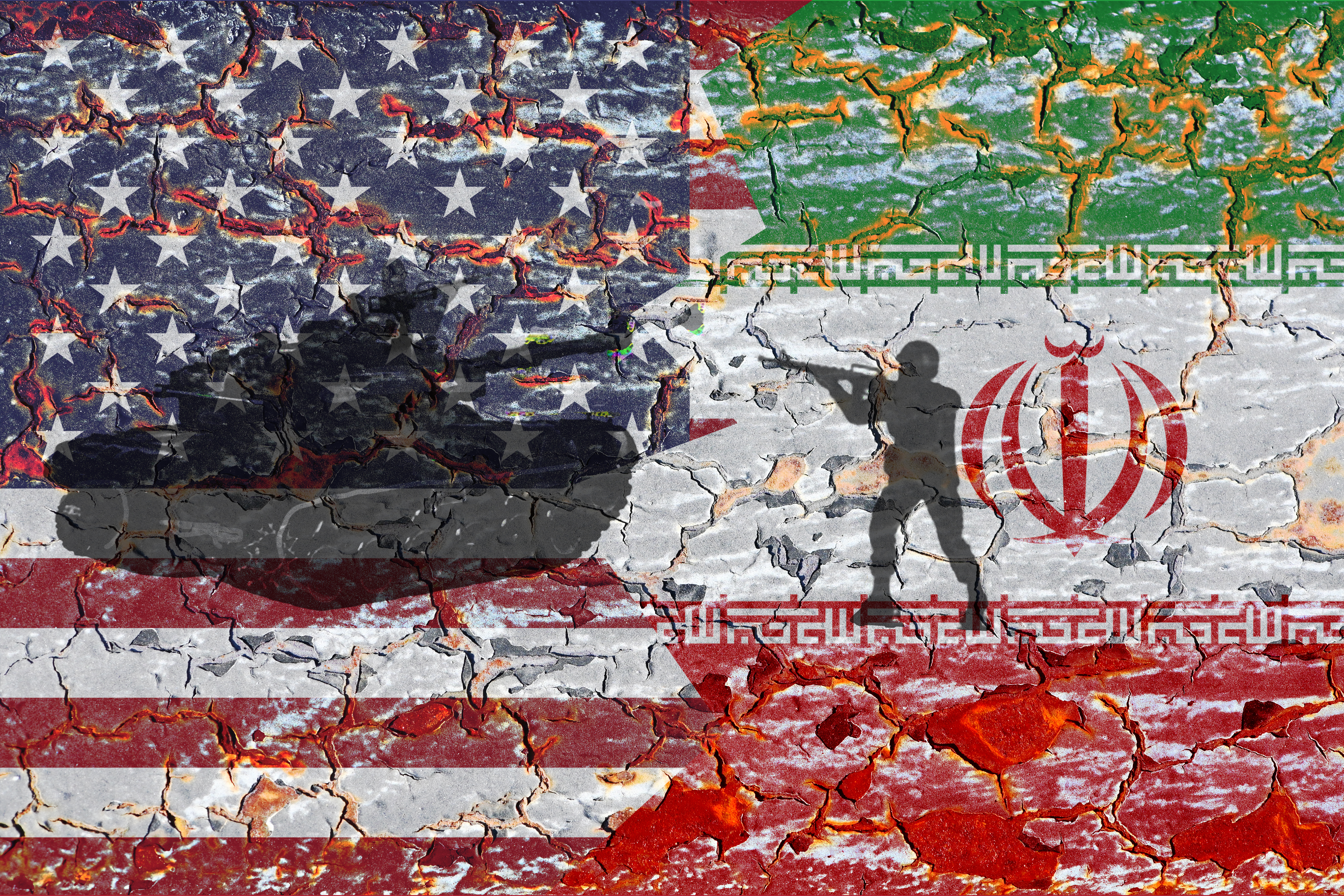
On Friday, President Trump announced that Iran had indicated interest in negotiating a deal with him and this news brought the Iranian threat back to the forefront of the news cycle. President Trump reportedly said, “Iran is a different place” after the US military successfully executed airstrikes taking out the Iranian nuclear program in June. This weekend, civil unrest in Iran and more civilian executions brought further scrutiny on the Iranian threat as the Trump administration pursues peace in the Middle East. Amidst scandals that have revealed a further lack of credibility for several major international news outlets headlines about the Iranian nuclear threat featured on the front page of many news sites this weekend. 5 months after the joint US-Israeli strikes on the Iranian nuclear weapons program, misinformation still abounds in the media about the successful strikes that President Trump greenlit in June. Anonymous government sources allege that the Iranian nuclear threat still poses a risk to the United States, and many news outlets are unfortunately functioning as supporters for Iranian regime propaganda as they spread statements from leaders in Iran touting the rebuilding of the nuclear program and misinformation stating that the US strikes did not cripple the nuclear capability of the regime. One headline from this weekend stated, “The airstrikes didn’t completely destroy the nuclear program. They only bought time.”
I spoke to Iran expert Beni Sabti, who visited Los Angeles to brief the Israeli consulate this weekend and gave me an exclusive interview shedding light on the situation in Iran. In addition to President Trump, DNI Gabbard, and several other expert sources who have confirmed the success of the US strikes on ending the Iranian nuclear program Sabti was able to confirm that the Iranian nuclear threat is not only crippled in the present day, but will most likely not be an issue for years to come as rumors that Russia and China are helping Iran rebuild the nuclear program are Iranian regime propaganda according to Sabti.
He succinctly summarized the situation stating, “So first of all we have to understand that today in this moment, there is no nuclear program of Iran because of the very high quality strikes also by Israel and the US. There attacks were very high quality and even the facilities hit for example if you hear in the news that they are only 60% or 70% functional, in the nuclear case, there is not such a thing as 60% it is 100% or nothing…One sentence about the help from China and Russia, about the nuclear issue, for 35 years they could have given Iran help on the nuclear program, but they won’t give them even the permission or the supplies to make the bombs. Because China and Russia are also neighbors of Iran and they would not create that threat for themselves. They are wiser than that.”
Sabti, Director of the Iran program at Institute for National Security Studies in Israel and a cultural expert on Iran who has consulted on films and movies including the Apple series Tehran, provided valuable insights into the Iran problem that highlighted where USA policy has succeeded and how US-Israel cooperation can become even more effective going forward. He stated, “With the Iran regime, it’s not about the bullets and the missiles at the physical threat. It’s more about how they think. And when they think like that (death to Israel and death to America), they, if we allow them, they will reach it…They are trying to bring back the missile program and the terror programs that are a threat to us, all of us, not only the Israelis, but the Americans. So many have suffered from the Iranian terror and of course the Iranian Islam. They have actually said a few days ago that they are also building or making progress with a missile that can hit New York. There is no nuclear problem but there is a missile program and they want to make progress with the help of Russia and China.”
Yet again, the mainstream Western media are woefully misled and their disinformation is dangerously obfuscating because it ignores the true threats that Iran poses and props up the regime which is in reality very weak. As Sabti pointed out, the Iranian missile program is still a threat to not only the region, but also the USA. The Iranian regime uses partners like Venezuela to project power around the world and threaten the USA. But according to Sabti, the military program is only one piece of the greater threat environment facing the West, including Israel and the USA, when combatting the Iranian terror regime. According to Sabti, “They (Iranian regime) cannot tolerate other ideologies, especially ideologies that talk about liberalism, freedom, individualism, they cannot tolerate that. This is the thing that they have with all the Western ideology.”
They use cultural dominance, soft power, and immigration as a means to infiltrate Arab nations and exert influence not in the interest of coexisting. And now, they are doing the same thing right here in America. Sabti described the threat saying, “In Texas, Michigan, in LA, even in New York, sometimes we hear about the Qatari money that they are the engine for the protests, but also the Iranian regime ideology, they are everywhere, they are in Africa, South America, Venezuela…and in the issue of hurting Western ideology they cooperate (with Qatar). And they do it softly, the soft power, they come and convince other nations that the US is bad and we (the Iranians) bring you another better ideology. So this is why the Arab countries and the other countries are afraid to go against Iran.”
As many American national security experts have pointed out, these types of threats if allowed to go unnoticed are much worse than the dormant Iran nuclear program. Unlike military threats, these issues require a whole of government approach. Sabti said, “If we (the US and Israel) cooperate, not only against the missiles, also about the cultural penetration. This is even more important, because words come first. After that comes the terror and the missiles and everything else.”
If the Trump administration wants to pursue peace in the Middle East and achieve their goals of expanding the Abraham Accords, they must give adequate attention to protecting the homeland as well as face the reality of these cultural ties to Iranian terror ideology in Arab states across the region. Sabti aptly summarized these modern threats saying, “A democracy has to defend itself.” He went on to describe the ways in which the Iranian regime has inserted itself into politics and gained influence in Arab and European countries describing relationships with funding that can be traced back to Iran used to influence education, media, culture, and legal systems. He also said, “Those agents of Iran, or Qatar, or Islamic brotherhood, there is one thing that they do all the time, and they feel that they are much more stronger than the countries that accepted them, they pray in the middle of the street…When they pray in the street its not about praying it’s about conquering that city or that country.”
Sabti, who was born in Tehran and escaped with his family to Israel in 1987 also used his cultural knowledge to share insights into the current unrest inside Iran and the resistance movements that are gaining momentum against the regime.
These domestic matters in Iran are highly relevant for the US and the Trump administration because Iran still poses the biggest obstacle to Trump’s vision for peace in the Middle East. While many in the world and in Iran would welcome a US led regime change campaign, history has shown us that change must come from the people themselves, and the Trump administration has consistently shown that they stand by this principle. His knowledge along with other experts who have studied or lived under the Iranian regime can help illuminate the ways that US-Israeli cooperation can support the people of Iran as they work to liberate their country from the terrorist ideology that has taken hold. This weekend news broke that members of the Iranian military and state police forces were seen protesting Khamenei and waving the Iranian lion and sun flag, which is banned by the regime as a symbol from pre-revolutionary Iran. According to Sabti this is a key step in weakening the Iranian regime and marks an important shift in the fight to end the Islamic Republic terror in Iran. Sabti recommended 2 main ways the US and Israel can support the Iranian people going forward. First, by showing leadership on the world stage and using our position as the world’s leading superpower to bring attention to the struggle going on inside Iran. And second, to continue developing communication efforts with the people directly inside Iran via Persian language social media and news outlets. While peace in the Middle East remains extremely improbable, the US and Israel can use their unique partnership to pursue diplomatic strategies for bringing incremental change to the region that can continue bringing hope for a brighter future. Hopefully the mainstream media can also support these opportunities with accurate reporting and a focus on the real threats we need to address in the present day.