

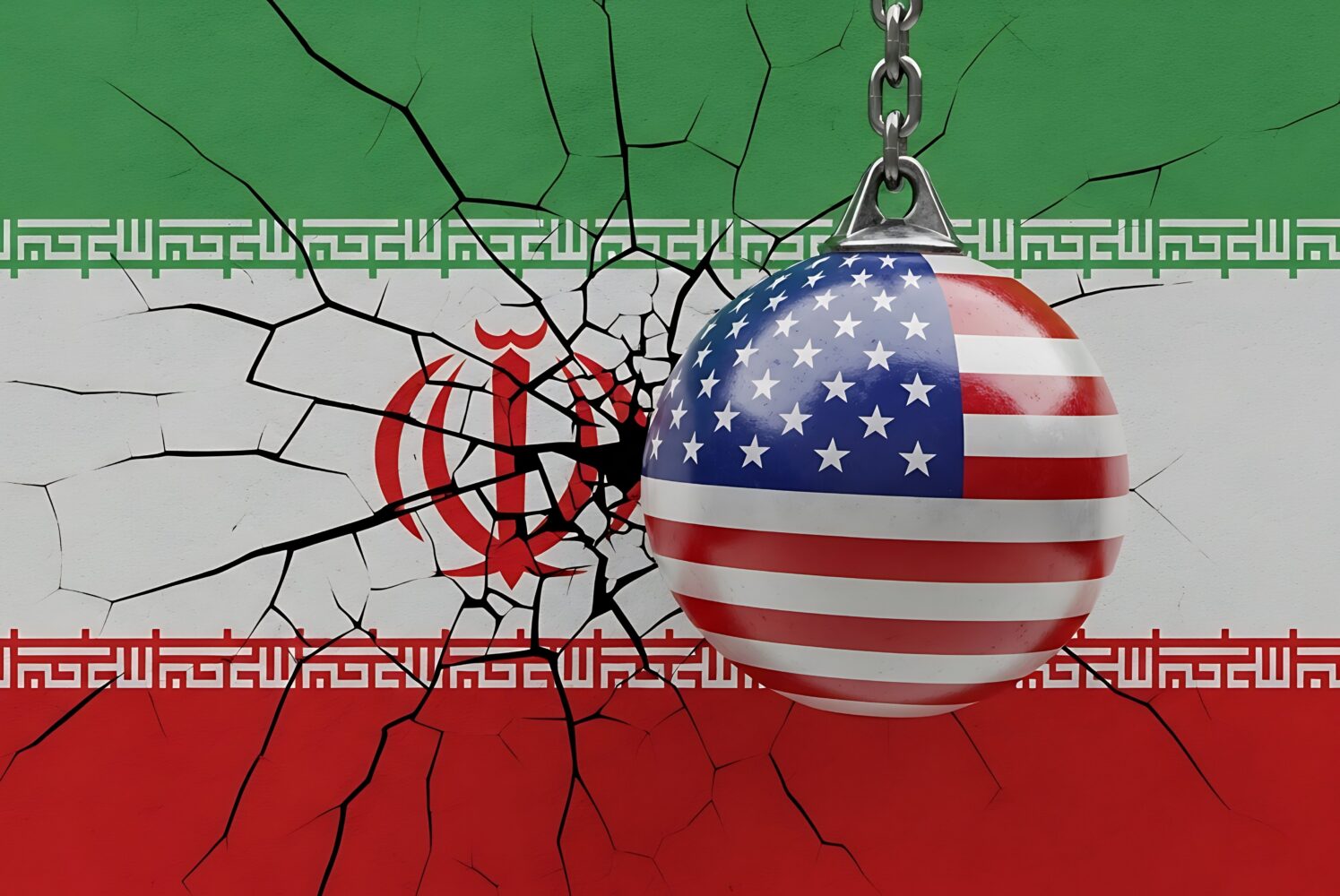
Peering through the fog of war as U.S. takes Iran to task in brutal military attacks
The U.S.-Israel military operation against Iran may have left some Americans reeling over the weekend, but for anyone who’s been paying attention, this move hardly comes as a surprise
Opinion-editorial by Summer Lane | March 2, 2026
Operation Epic Fury came as a surprise to most of the world. Over the weekend, the U.S. and Israel launched massive attacks against Iran, making more progress in 36 hours against the state sponsor of terrorism than, arguably, the Pentagon accomplished in the decades of fighting against terrorism in the Middle East under prior administrations.
“Following our obliteration of Iran’s nuclear program in Operation Midnight Hammer…we warned Iran not to make any attempt to rebuild at a different location, because they weren’t able to use the ones we so powerfully blew up,” President Trump said on Monday, during remarks at the White House. “But they ignored those warnings and refused to cease their pursuit of nuclear weapons. In addition, the regime’s conventional ballistic missile program was growing rapidly and dramatically, and this posed a very clear and colossal threat to America and our forces stationed overseas.”
So far, the strikes against Iran have been impressively precise and militarily surgical, wiping out swaths of Iranian regime leaders, including Supreme Leader Ayatollah Ali Khamenei, and sinking 11 Iranian ships in the Gulf of Oman – the entire fleet present in that region.
President Trump said that the projected timeline for the operation could be around four to five weeks but noted that the military strikes were moving along well ahead of schedule already.
It’s no surprise that Americans are concerned about the potential repercussions of yet another conflict in the Middle East. After all, thanks to President Bush, the U.S. spent decades in the hot deserts of far-off, foreign lands, looking for “weapons of mass destruction” and waging war against terrorists that still lurk in the shadows today.
But is this operation against Iran a real “war?”
The president’s objectives
Commentators and media talking heads may repeatedly note that they are unsure “what” the United States is doing in its strikes against Iran – and it’s a very fair question – but to be equally fair to the Trump administration, they have made the goals of this mission quite clear.
“To the media outlets and political left screaming ‘endless wars’: STOP,” said Secretary of War Pete Hegseth during a briefing at the Pentagon early Monday morning.
He added, “This is not Iraq, this is not endless. I was there for both. Our generation knows better, and so does this president. He called the last 20 years of nation-building wars ‘dumb,’ and he’s right. This is the opposite. This operation is a clear, devastating, decisive mission: destroy the missile threat, destroy the navy, no nukes.”
President Donald Trump reiterated this clear list of military objectives during a brief update at the White House just hours later: destroy Iran’s missile capabilities and future capacity to build such weapons, annihilate the Iranian Navy, stop Iran from obtaining a nuclear weapon, and halt Iranian sponsorship of terrorist activities beyond its borders.
“We have the strongest and most powerful, by far, military in the world, and we will easily prevail. We’re already substantially ahead of our time projections,” the president said.
If nothing else, this should hopefully give Americans a measure of comfort. Their leadership is talking to them and communicating its goals clearly and concisely, and according to both President Trump and Secretary Hegseth, the plan is to get in and out of Iran quickly.
Venezuela is the model
Operation Absolute Resolve in Venezuela in early January was a small taste of the military operation to come against Iran. What the world saw in Venezuela – the complete domination of an entire country in just a matter of hours – demonstrated a new type of warfare that may become known as the “Trump Doctrine”: quick, lethal, and effective.
Like it or not, these two military operations, back-to-back, have demonstrated that the “forever wars” of yesteryear were an intentional choice – a deliberate and bloody action that punished countless American soldiers for seemingly no other reason than to feed the beast of a global, money-making war machine.
President Trump is methodically using the U.S. military to stabilize specific regions of the world. Whether you support bombing Iran or not, you can’t deny that the tactic has been effective so far, at least in Venezuela.
And, despite the administration’s media soundbites about Iran’s waffling during negotiations, this invasion has likely been planned from the beginning. Consider this: the U.S. military essentially seized control of the largest oil reserves in the world (Venezuela) before launching an attack against Iran, one of the world’s largest oil power players.
The U.S., thanks to Operation Absolute Reserve, now has no real need for Middle Eastern oil, whilst China is quite dependent on it.
Now that’s a good strategy.
The United States continues, under President Trump, to expand its influence over key regions of the world rich in critical resources like oil and rare earth minerals – becoming increasingly more independent and choking off foreign adversaries like Russia and China.
The consequences of this attack on Iran
There are many potential positives to taking out the radical Islamist terrorist regime in Iran. The Middle East could become more stable. The U.S. may be more protected from nuclear strikes from wild-eyed Islamic radicals (as President Trump has stated). Israel, perhaps, will stop asking for the U.S. to clean up the Middle East seemingly every week.
Prudent Americans are rightfully concerned, as well, about the potential fallout here at home – and there are several to consider.
First is the threat of an Iranian terrorist cell retaliation effort in the domestic U.S.
Secretary Hegseth addressed this very real possibility on Monday, especially in the wake of an alleged terrorist attack at an Austin bar over the weekend.
“This is a former regime, a regime that seeks to export that ideology, and try to sow terror,” Hegseth said. “We’re ready for that; we’ve seen these types of folks before. And the American people can rest assured that we’re vigilant on that.”
The second potential consequence, of course, is that destroying the Iranian regime will result in a power vacuum that sparks chaos and unrest in the Middle East, as regime change often does.
And while Secretary Hegseth has denied that this was a regime-change operation, he did remark that “the regime sure did change, and the world is better off for it.”
It’s too soon to tell what’s going to happen in Iran. If this is not a true regime change operation, then it will be completely up to the people of Iran to seize the moment and choose freedom. If they do not, that will be their shoulders, not the United States’.
Third, this move against Iran, carried out jointly with Israel, could result in more global animosity toward the Holy Land. It’s no secret that Prime Minister Netanyahu has long pined for war against Iran, and it looks like he finally got his wish. As Israel is strengthened and emboldened, thanks to the power of the U.S., other countries may begin to harbor increased resentment for the small country, which could cause future conflicts. It could also further sink support for Israel within America itself.
Americans already feel broadly more sympathetic for Palestinians than Israelis, according to new polling, and that sentiment is especially true among Gen Z voters (by 53 percent).
Wrapping up
It’s good and right to be critical of warfare. Americans have been lied to so much in the modern era about why war has been necessary and why their young men and women have died on foreign shores.
It’s good to ask questions, and it’s great to hold the administration accountable. But so far, the Trump administration has reasonably communicated its goals to the American people and, until the U.S. military far exceeds its operational timeline in Iran, it’s much too soon to panic. Endless war seems very unlikely under President Trump and his Pentagon leadership team.
Photo: Adobe Stock