
The Trump Doctrine: the ‘Great Reset’ nobody saw coming
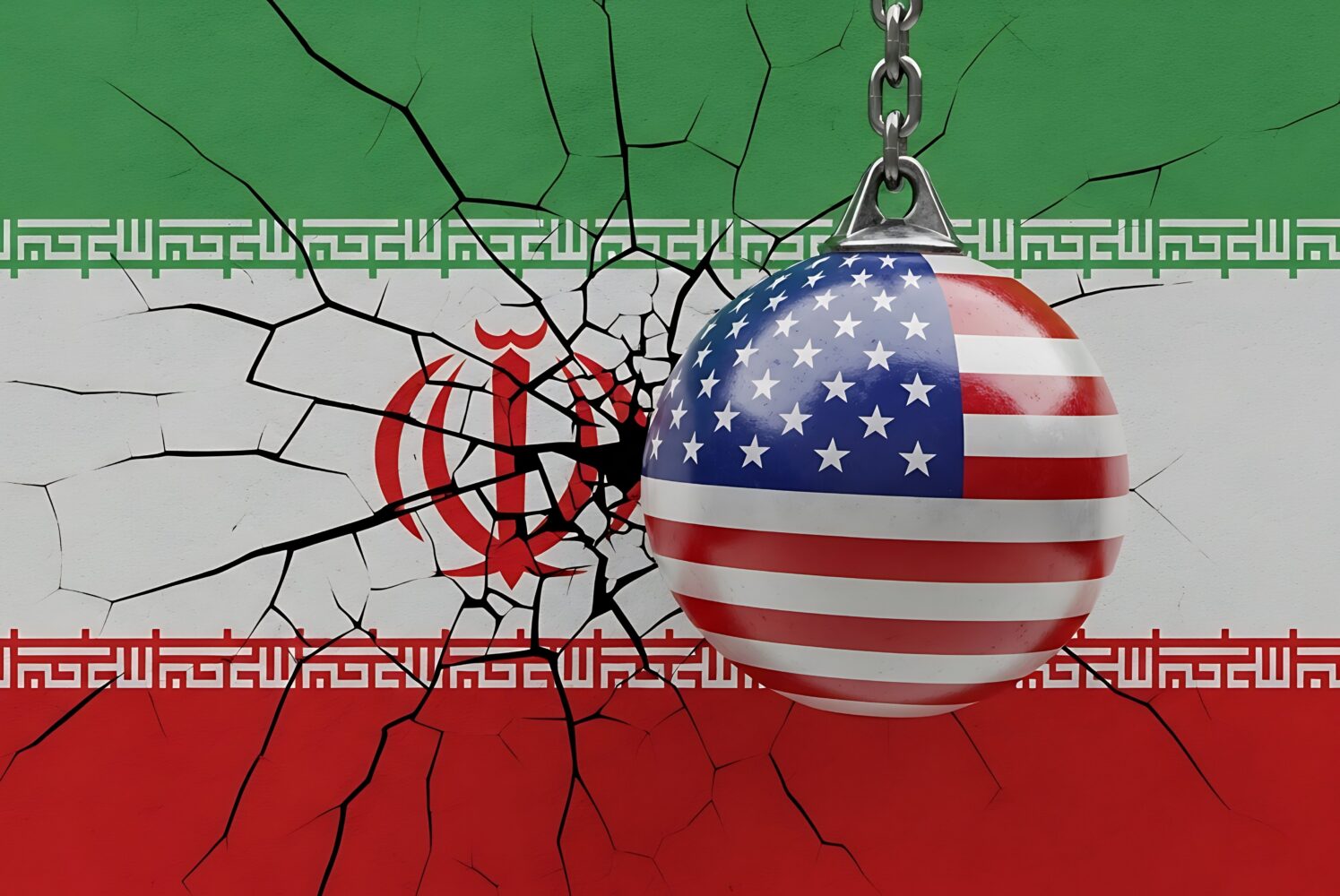
Operation Epic Fury has evoked many emotions and reactions from Americans. The question remains: will this turn into war? Even if it doesn’t, how does this change the world?
Opinion-editorial by Summer Lane | March 6, 2026
President Donald Trump’s decision to launch Operation Epic Fury, a massive, large-scale combat operation against Iran, has made waves globally. It has sparked a tsunami of reactions ranging from fervent support to anxious trepidation.
Many Americans are still traumatized from forever wars in the Middle East, so it makes sense that the broad majority of the country (only one in four Americans support military action, via Reuters/Ipsos) is hesitant to re-engage in a place that took so much from the country and delivered very little to nothing in return.
For better or for worse, Secretary of State Marco Rubio revealed earlier this week that the American operation against Iran was a preemptive strike. “There absolutely was an imminent threat,” Rubio told reporters. “…We knew that if Iran was attacked, and we believed they would be attacked, that they would immediately come after us, and we were not going to sit there and absorb a blow before we responded.”
He confirmed that the U.S. “knew there would be an Israeli action” that would “precipitate an attack against American forces, and we knew that if we didn’t preemptively go after them before they launched those attacks, we would suffer higher casualties.”
In other words: Israel was going to strike Iran with or without the help of the U.S. Such an attack by Israel would have sparked Iranian aggression against the United States, forcing the American military to respond defensively. No matter what, the U.S. was going to get dragged into this conflict – and it seems that Israeli Prime Minister Benjamin Netanyahu’s quest to annihilate Iran was the driving force.
When asked whether Israel forced America’s hand in the conflict, President Donald Trump said, “No. I might have forced their hand.”
Just weeks ago, the U.S. conquered Venezuela, seized control of the world’s largest confirmed oil reserves, and handpicked its successor to Maduro (Delcy Rodriguez). The U.S. military has also achieved operational control over the Caribbean Sea and the Gulf of America with its anti-narco-terrorist campaign in Operation Southern Spear. President Trump also told CNN this week that Cuba – a longtime communist regime – “is gonna fall pretty soon, by the way…they want to make a deal so badly.”
And, amid the noise and furor, President Trump is still posturing to take control of Greenland, citing its importance for “national security” reasons.
Now, the U.S. has set its sights on the Middle East. The Monroe Doctrine of 1823 – once meant to protect American influence over the Western Hemisphere – seems to be expanding into other spheres. This is a new doctrine.
This is the Trump Doctrine.
The ‘Great Reset’ nobody saw coming
Under President Trump, the modern U.S. military is being used in perhaps the most surgically efficient way it has ever been utilized. Its campaigns are unrepentantly violent and swift. With Pentagon leaders such as Secretary of War Pete Hegseth and Chairman of the Joint Chiefs of Staff Dan Caine, this lethal approach to warfare is no surprise, but the operation in Iran seems to be.
President Trump campaigned heavily on two slogans: “No New Wars” and “Peace Through Strength.”
Most Americans can agree that only countries that can back up their brash talk can survive on the world stage. The U.S. military proved in Venezuela that it is the best on the planet. It continues to do so, but the question remains: Is this Middle East conflict, heavily driven by Israel’s ambitions to expand its control over the Middle East, in the best interests of the United States?
Speaker Mike Johnson (R-La.) said earlier this week, upon the War Powers resolution failing on the floor, “We are not at war. We have no intention of being at war.”
On Monday, Secretary Hegseth strongly insisted that this operation was “not Iraq, this is not endless.”
He declined to call Operation Epic Fury an act of war, which it technically is not, and instead described it as a “clear, devastating, decisive mission: destroy the missile threat, destroy the navy, no nukes.”
Hegseth also said this was not a “so-called regime war” meant to change Iranian leadership. And yet, that’s what is happening.
“There will be no deal with Iran except UNCONDITIONAL SURRENDER!” President Trump declared on Friday. “After that, and the selection of a GREAT & ACCEPTABLE Leader(s), we, and many of our wonderful and very brave allies and partners, will work tirelessly to bring Iran back from the brink of destruction, making it economically bigger, better, and stronger than ever before.”
The United States is putting tremendous resources – and lives – into the devastation of Iran and is closely involved in its realignment. If that’s not regime change, it’s hard to imagine what is.
And, while the administration says this is not a long-term war, the U.S. military has already lost six confirmed servicemembers. Additionally, the threat of potential fallout at home has not gone unnoticed by Americans.
Consider the president’s comments this week to TIME Magazine:
Asked whether Americans should be worried about retaliatory attacks at home, Trump acknowledges the possibility. “I guess,” he says. “But I think they’re worried about that all the time. We think about it all the time. We plan for it. But yeah, you know, we expect some things. Like I said, some people will die. When you go to war, some people will die.”
President Trump is a very pragmatic leader, and his candor should be appreciated. Yet his use of the word “war” is troubling to many. If we’re not in a war, as the administration insists, why is the president locked into a wartime mindset?
Hard times call for hard decisions. And to be completely fair to the president, he also told TIME the following: “America First is really about keeping America healthy and well, and not having other countries, you know, hit us. There are occasions when you have no choice. This was an occasion.”
If it’s criticism of the president you’re after, there are certainly plenty of sources in the media and among influencers online. And yet it seems only fair to give President Trump the benefit of the doubt, like Secretary Hegseth noted earlier this week.
“Our generation knows better, and so does this president. He called the last 20 years of nation-building wars ‘dumb,’ and he’s right. This is the opposite,” Hegseth stated.
This rapid expansion of U.S. military dominance across the world under President Trump is remarkably uncharted territory for America. While the Monroe Doctrine emphasized the need to maintain influence and control over the Western Hemisphere, President Trump is taking it a step further.
The Trump Doctrine, quite literally, proclaims that a nation can just do things. It also seems to proclaim that any nation, anywhere, can be taken by force. This has always been true throughout human history, but the U.S. is reminding everyone, everywhere, of this fact.
This should strike fear into the hearts of America’s enemies, and it should soberly humble the American people. With great power comes great responsibility. The Trump Doctrine is reshaping geopolitics as we know it. It’s the “Great Reset” nobody saw coming.
It’s a brave, scary, and unknown new world.
Photo: Adobe Stock