

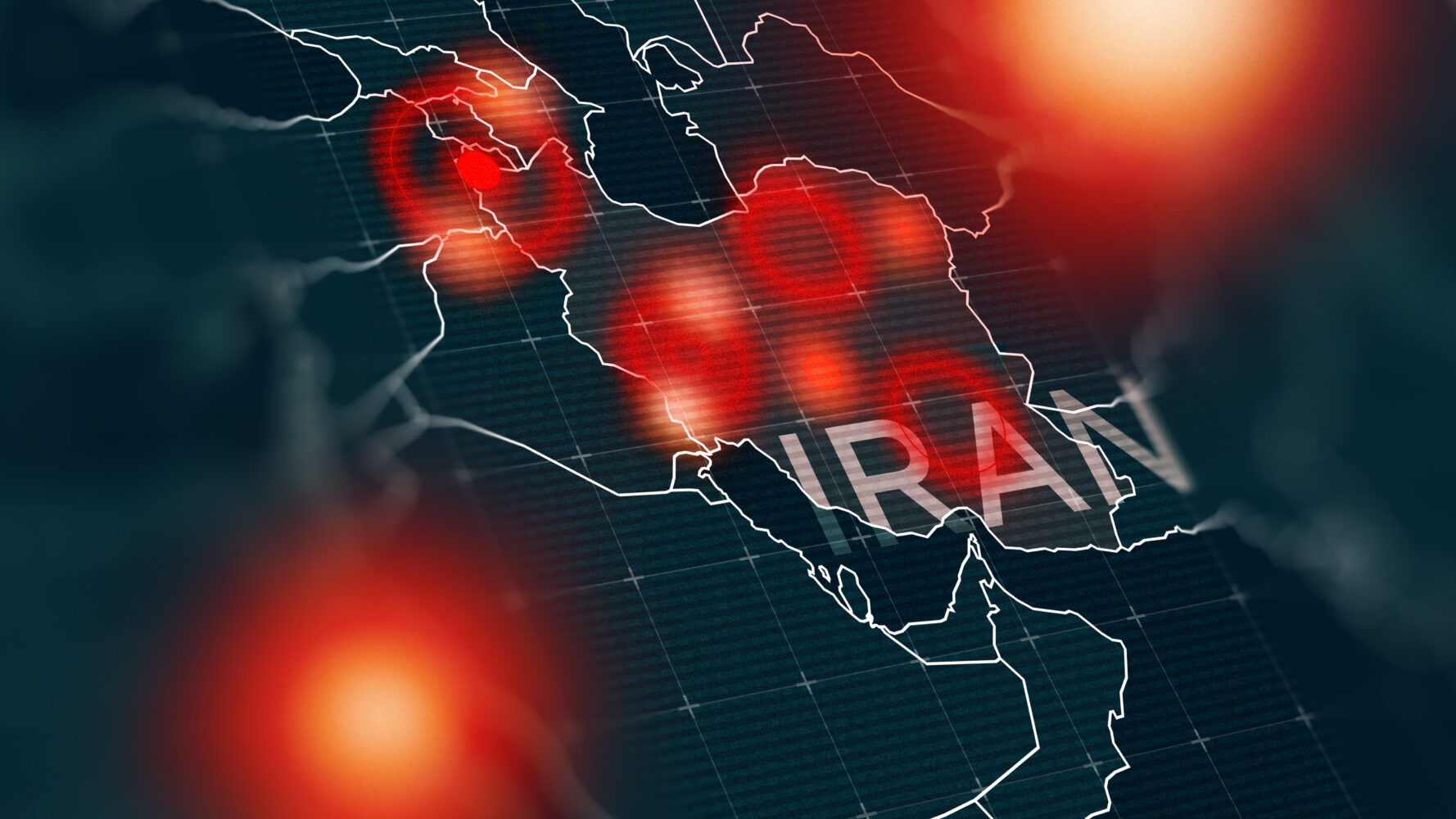
OPINION: Five reasons why the war with Iran must end immediately
The conflict in the Middle East has been hard on Americans and the world. The best thing to do would be to end it immediately. Here are five common sense reasons to wind it down right away.
Opinion-editorial by Summer Lane | September 28, 2026
On February 28, 2026, the nation awoke to startling news: the U.S. had launched serious attacks against Iran. In conjunction with Israel, its joint military partner, Operation Epic Fury turned the full force of the U.S. military on the Middle East.
It was a conflict that was meant to last just a few weeks, but on Monday, the war hit its seventh-month milestone.
The marker brings to mind comments from Secretary of War Pete Hegseth, who, during the early days of the war, slammed media reports for suggesting the conflict was becoming protracted.
“Another example of a fake headline that I saw yesterday: ‘WAR WIDENING,’” Hegseth told reporters in March. “Here’s a real headline for you, for a real, patriotic press: ‘Iran Shrinking, Going Underground’…the only thing that is widening is our advantage.”
Unfortunately, the war is protracted. The crux of the issue, of course, is that while the U.S. military is unquestionably outstanding and powerful, Iran’s Islamic Revolutionary Guard Corps (IRGC) threatens the Strait of Hormuz every day. This has destabilized the world, and as such, the conflict continues to drag on.
So, where does the United States go from here? What should President Donald Trump do next? The most reasonable course of action, in this writer’s humble opinion, would be to end the war immediately.
Here are five reasons why.
The energy crisis must end
The world has been rocked and rolled by an energy bottleneck in the Strait of Hormuz. Energy prices in the U.S. are rising. From diesel and gas to heating oil and fertilizer, the cost of energy is creating a massive burden for American businesses and families.
“The big problem is the refineries in Russia are being blown up,” President Trump told reporters over the weekend. “This isn’t really a Middle Eastern problem, this is more of a Russia problem — that Ukraine and Russia are going at it, and Ukraine is blowing up diesel refineries in Russia because they do a lot of refining.”
While the price of diesel may be directly linked to the war between Russia and Ukraine, make no mistake: the chaos in Eastern Europe has intensified as the U.S. focus has been elsewhere. Russian President Vladimir Putin and Ukrainian President Volodymyr Zelensky are clearly taking advantage of the Middle Eastern conflict, which is only making the energy crisis worse.
Ending the war would bring renewed stability to the energy markets and ease the price of gas and diesel in the U.S. – a much-needed economic pressure release valve.
The U.S. military is unnecessarily in harm’s way
As reported by LindellTV, a total of 861 U.S. military men and women have been injured amid the war with Iran. This count stems from available data on the U.S. Defense Casualty Analysis System, which was updated in September.
It was also recently reported that eight U.S. Marines were injured in an Iranian cruise missile strike in the Strait of Hormuz.
Additionally – and most tragically of all – 19 U.S. servicemembers have died amid the conflict in the Middle East, according to available data.
The only way to stop the injuries and killings is to pull out of the region.
The longer U.S. military remains engaged, the higher the likelihood of a mass-casualty event
In light of the aforementioned injuries and casualties, it seems obvious that the longer the U.S. military is engaged in the region, the higher the possibility becomes that some kind of mass-casualty event could happen to U.S. troops. This would be a horrific disaster for all involved – and it’s completely avoidable.
The Trump administration made it clear that the goal of U.S. military operations in Iran was simple: eradicate Iran’s ability to build nuclear weapons, destroy its missile infrastructure, cripple the Iranian Navy, and stymie Iranian terrorist networks.
By this measure, the U.S. military has been successful. It remains a mystery, then, why U.S. Navy ships are still engaged in the region, and why U.S. troops remain precariously within reach of Iranian missiles in the Strait of Hormuz.
“…Attaching U.S. military personnel to civilian ships makes those ships legitimate targets,” assessed Joe Kent, the former director of the National Counterterrorism Center.
He continued, “This increases the threat level for all vessels and adds an even risker layer of complexity to the already challenging conditions we created in the SOH. It’s time to walk away now. End this war—any effort to use military force to secure a ‘win’ will not have a meaningful lasting impact. It’s not worth the cost to our troops or inviting further escalation in this foolish war.”
On this, Kent is absolutely correct. It’s not worth the cost to our troops. Neither is it worth risking potential escalation. Bring the troops home before it’s too late.
Russia and China cast an ominous shadow
President Trump has always understood that if there’s one thing the U.S. doesn’t want, it’s a strong alliance between Russia and China. “He [Biden] did something that was unthinkable President Trump said last year, after meeting with President Putin in Alaska.
“He drove China and Russia together,” Trump continued, slamming Biden. “That’s not good. If you are just a minor student of history, it’s the one thing you didn’t want to do.”
He’s correct. A China-Russia super-alliance would be the prelude to a world war that no one wants to imagine. And yet, as the U.S. is engaged in the Middle East, China and Russia cast long shadows.
“Currently, transformation not seen in a century is accelerating across the globe, and the international situation is fluid and turbulent,” said Chinese President Xi Jinping in May, while speaking to President Trump.
Xi continued, “The world has come to a new crossroads. Can China and the United States overcome the Thucydides Trap and create a new paradigm of major country relations?”
His reference to the Thucydides Trap is telling: it is a political theory, rooted in the Peloponnesian War. It postulates that the potential for war increases exponentially as one superpower stands to eclipse an established one.
Here, Xi was making both an observation of the current global landscape and a veiled threat: China, like Russia, is strengthened by the Middle East conflict. A destabilized globe, due to the war in Iran, only pushes Russia and China into stronger positions.
This is a dangerous place to be.
A prolonged war will guarantee a Democrat president in 2028
The 2026 midterm elections, amid the war with Iran, are likely a prologue to the political story poised to unfold in the 2028 presidential election race. Americans disenchanted with an ongoing war will probably get politically radical and, true to historical precedent, vote for a president on the opposite side of the aisle.
Vice President J.D. Vance – if he becomes the Republican Party’s presidential nominee – will have a hard time separating himself as a candidate from the baggage of a long-term Middle East war.
This will give any opponent a political advantage. Ongoing war is a gift to the Democrat Party – and it would undo so much of the hard work that many American patriots have done to secure a common-sense, conservative-leaning agenda since 2024.
This one reason alone should be enough to end the war immediately. The future of the country increasingly appears to hinge on the outcome of the Middle East conflict with Iran. President Trump must choose the path of peace, not just for America’s sake, but for the sake of the entire world.
Photo: Adobe Stock