
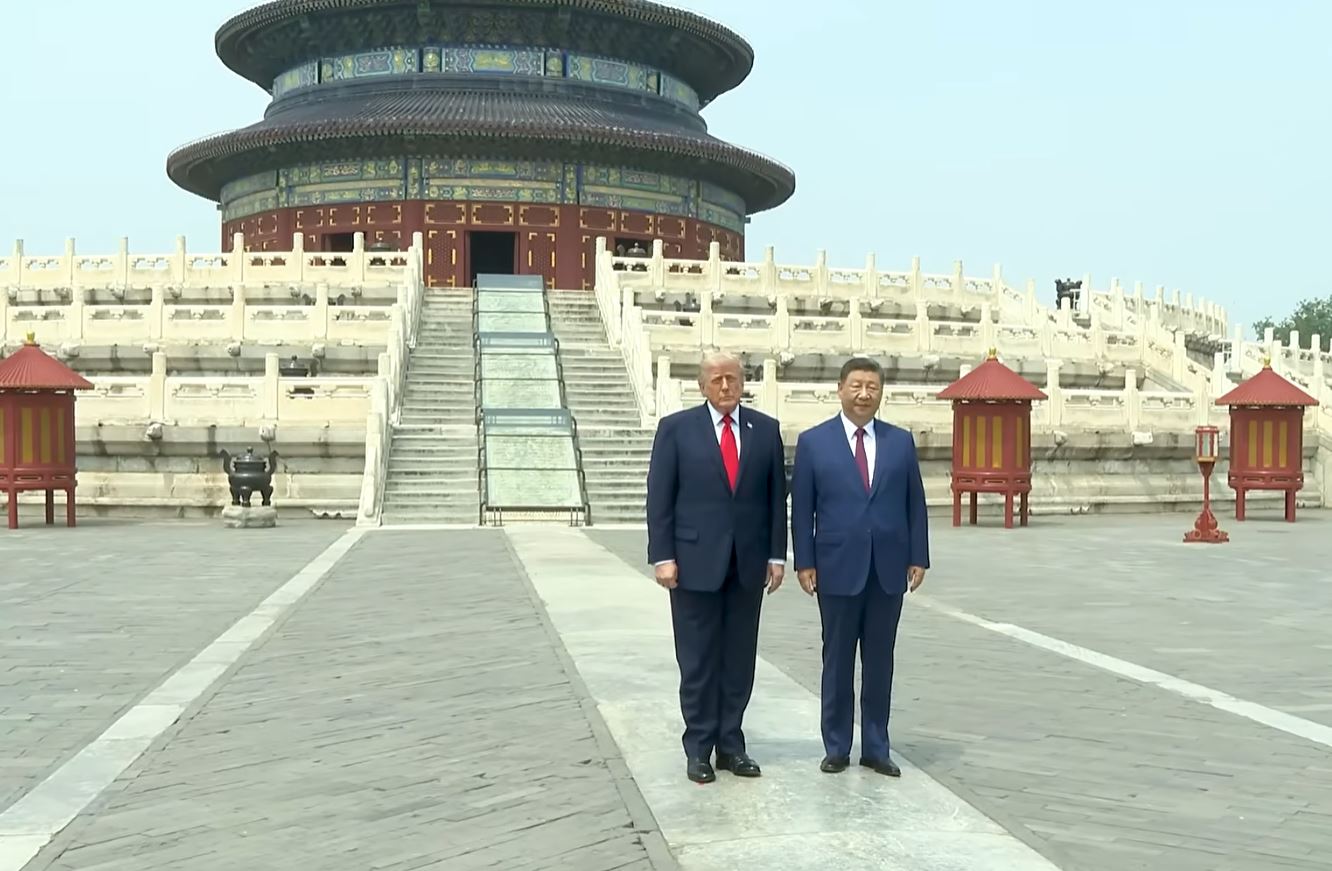
What were the results of President Trump’s trip to China?
President Trump’s visit to Beijing, China, was historic and beautiful, but what were the results?
Analysis by Summer Lane | May 15, 2026
President Donald Trump’s two-day summit in Beijing was the center of the world’s attention this week. Extremely important topics were on the table, ranging from the Iran War to the flow of fentanyl precursors into the United States.
The talks were expected to yield a few trade deals and secure, perhaps, at least some pledge from Chinese President Xi Jinping on helping to reopen the Strait of Hormuz. On several fronts, commitments were secured, but on others, details remain vague.
On trade and business
The topline results from President Donald Trump’s visit to Beijing included a Chinese commitment to purchase 200 Boeing aircraft and increased purchases of U.S. agricultural products, such as soybeans. However, details of these commitments are sparse, with no real concrete data on such promises yet.
“The farmers are going to be very happy,” President Trump told reporters aboard Air Force One during the flight back to the U.S. “[China is] going to be buying billions of dollars of soybeans.”
On the Iran War
President Xi, in terms of what was released to the public, has made only two real comments about Iran during these discussions with President Trump. First, Xi, according to President Trump, said that the Chinese would not arm the Iranians. And second, the Chinese, too, would like to see the Strait of Hormuz opened.
Xi offered his assistance to President Trump to help facilitate the Strait’s reopening, the president said this week.
Overall, Chinese interests in reopening the Strait of Hormuz stem from their longstanding history of purchasing oil from Iran. China generally enjoys a good diplomatic relationship with Iran, and has been unable to import Iranian oil because of the U.S. Naval blockade of the Strait.
On Taiwan
Taiwan, for Xi, was probably the most important topic of the trip. Behind closed doors, rumors swirled that tensions were high, and those murmurs were probably not far from the truth.
During his initial remarks to President Trump and the American leadership cabinet, President Xi openly threatened the United States by discussing the rise of Chinese power and the precarious situation it has created.
“Currently, transformation not seen in a century is accelerating across the globe, and the international situation is fluid and turbulent,” Xi said during translated comments. “The world has come to a new crossroads. Can China and the United States overcome the Thucydides Trap and create a new paradigm of major country relations?”
The Thucydides Trap is a political theory rooted in the ancient conflict of the Peloponnesian War, a conflict between Athens and Sparta. Coined by political scientist Graham Allison, it refers to the potential for war and conflict when one rising power threatens to eclipse an established one. In this case, Xi was referring to China eclipsing the United States as the global hegemon.
Xi was observing the global instability brought on by the war with Iran, and was also likely delivering a thinly-veiled threat about Taiwan. Namely, that China would like to see the United States step back from the situation, as Xi has long sought to bring Taiwan under Chinese control.
A readout of President Trump’s talks with Xi, released Thursday by the Ministry of Foreign Affairs (People’s Republic of China), seems to confirm this was important to the Chinese agenda:
“If it is handled properly, the bilateral relationship will enjoy overall stability. Otherwise, the two countries will have clashes and even conflicts, putting the entire relationship in great jeopardy. ‘Taiwan independence’ and cross-Strait peace are as irreconcilable as fire and water. Safeguarding peace and stability across the Taiwan Strait is the biggest common denominator between China and the U.S. The U.S. side must exercise extra caution in handling the Taiwan question.”
President Trump told reporters that he discussed Taiwan “a lot” with Xi, but declined to get specific.
“On Taiwan, [Xi] does not want to see a fight for independence because that would be a very strong confrontation, and I heard him out,” the president remarked.
President Trump also said that he had made “no commitment either way” on the issue of Taiwan, amid pressure on whether to move forward with a major arms package that would benefit the tiny country.
On continued diplomacy
President Donald Trump extended an invitation to President Xi Jinping to visit the White House in September, suggesting that he intends to continue negotiating with the Chinese leader.
“It is my honor to extend an invitation to you and Madame Peng to visit us at the White House this September 24th, and we look forward to it,” President Trump said, toasting to the “rich and enduring ties between the American and Chinese people.”