
Too soon to tell: Vice President Vance’s chances in 2028 are hard to decipher
The war with Iran has reshuffled the political board in a rapid and demonstrative way. Vice President J.D. Vance may be the GOP’s heir apparent, but much can change in two years.
Opinion-analysis by Summer Lane | May 29, 2026
Vice President J.D. Vance has long been billed as the heir apparent to President Donald Trump’s seat in the Oval Office, but rumors have arisen recently that he may be reconsidering a run in 2028.
“JD Vance, now the lone dove in Donald Trump’s cabinet after [Tulsi Gabbard]’s resignation, has been left more isolated than ever and is even considering abandoning a run for the presidency in 2028, multiple sources tell the Daily Mail,” the outlet wrote.
The allegation comes amid a tumultuous time for the White House, as the U.S. is embroiled in a precarious war with Iran – a conflict that has dragged on for weeks after being launched on February 28, 2026. The U.S. and Iran have been in a ceasefire since early April, but it is tenuous at best, and the Strait of Hormuz – a key shipping corridor for much of the world’s oil and energy supply – has remained shut, significantly stressing global markets.
At the moment, President Trump’s job approval sits at 36 percent, according to the most recent information from Gallup. While it’s been widely alleged that Director of National Intelligence Tulsi Gabbard, like Vance, was opposed to the war in Iran, her stated reason for resigning from her post was to care for her husband, Abraham, amid a difficult cancer diagnosis.
There have been other high-profile departures: Attorney General Pam Bondi, National Counterterrorism Director Joe Kent, Department of Homeland Security Secretary Kristi Noem, and Labor Secretary Lori Chavez-DeRemer.
Weeks ago, when President Donald Trump was sitting ringside at a UFC fight with Dana White and Secretary of State Marco Rubio, it was Vice President J.D. Vance who was sent to Islamabad, Pakistan, to inform the world that peace talks had failed.
It seemed almost as if Vance was being forced through some kind of political humiliation ritual. Perhaps his reported opposition to the conflict failed to gain him friends within the Warhawk circles of D.C.
And certainly, the war with Iran hasn’t boosted Vance’s chances of winning the presidency in 2028. Consider this reporting from The New York Times:
“Nobody in Mr. Trump’s inner circle was more worried about the prospect of war with Iran, or did more to try to stop it, than the vice president.
Mr. Vance had built his political career opposing precisely the kind of military adventurism that was now under serious consideration. He had described a war with Iran as ‘a huge distraction of resources’ and ‘massively expensive.’”
The outlet reported that the vice president had pushed for a “limited, punitive strike” against Iran, rather than a full-scale regime-change war. President Trump hasn’t even denied that Vance had a different position on the war with Iran.
“He was, I would say, philosophically a little bit different than me,” the president told reporters in March. “I think he was maybe less enthusiastic about going, but he was quite enthusiastic.”
So, whether it’s a deep divide or not, it seems clear that Vance favored a non-interventionist approach when it came to Iran.
Perhaps Vance realized additionally that the “pro-peace ticket” of 2024 taking the nation to war in 2026 would bode ill for his future political aspirations, and frankly, he would be right.
Despite rumors in the media, Vice President Vance has slapped back at allegations that he is feeling increasingly “isolated” in the White House amid presumably dimming presidential chances.
A spokesperson for the vice president told The Independent that the Daily Mail’s report was “just a flimsy compilation of completely illegitimate sources who have no idea what they’re talking about.”
And yet, it’s too soon to tell. So much can happen in politics in two years. As it is, the rising star on the horizon seems to be Secretary of State Marco Rubio, whose communicative prowess with the media and diplomatic skills have solidified his position as a standout member of President Trump’s cabinet.
But can either Rubio or Vance win the presidency in 2028 if this war in Iran isn’t wrapped up, and soon? It’s hard to say. Who could have predicted that a real estate developer from New York would have captured the 2016 presidential election? There’s too much fluidity to make a call on what could happen in 2028 – whether Vance will run, whether Rubio will challenge him, and whether the Republican Party will be in a stronger or weaker position at that point.
It seems obvious, however, that the war with Iran must come to an end if Vice President Vance – and the entire Republican Party – have any chance of recovering the monumental political capital they came into power with in 2025. This recovery process will likely determine Vance’s political decision in 2028.
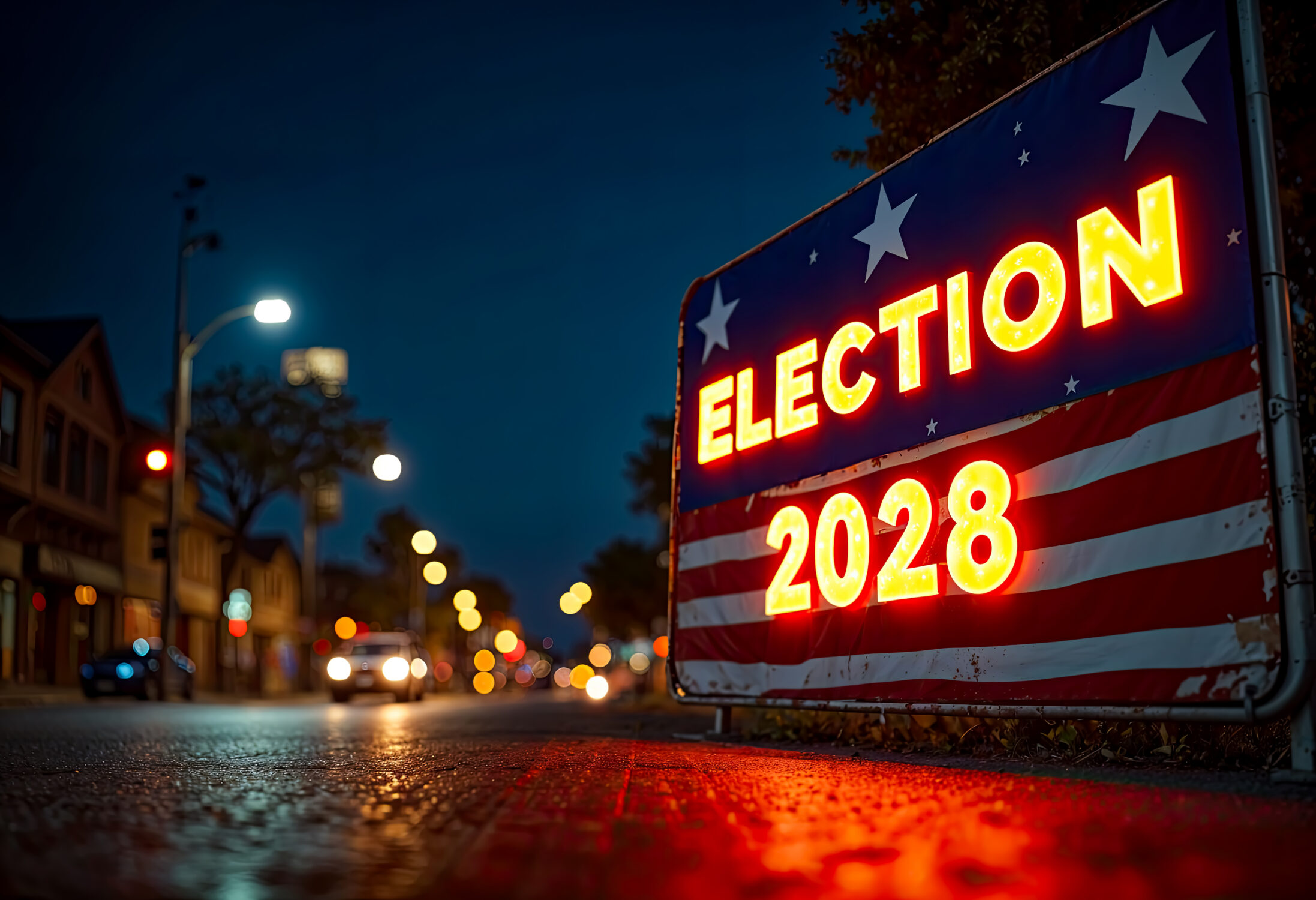
Photo: Adobe Stock