
China dangerously lurks in the shadows as America grapples with Iran War
The war with Iran has caused many problems for America, but on the world stage, it has sparked the beginning of what could be a potential reshuffling of powers.
Opinion-editorial by Summer Lane | May 11, 2026
This week, U.S. President Donald Trump will fly to China, where he will meet with President Xi Jinping on the heels of a months-long economic war that culminated in the U.S. Supreme Court decision to axe Trump’s tariff authority – a power he had yielded ruthlessly against the Chinese.
Now, in the wake of castrated executive tariff authority under the International Emergency Economic Powers Act, and amid a dicey ceasefire with Iran, America seems pulled taut between multiple crises.
The president’s trip to China will be filled with pageantry, no doubt. Along for the experience will be 16 mega-wealthy American CEOs, like Tim Cook of Apple and Elon Musk of Tesla.
The talks will center mostly on trade, but the Iran War will likely be front and center, especially considering China’s recent meeting with the Iranian foreign minister. In those talks, China urged Iran to reopen the Strait of Hormuz, seemingly moving on a request from American officials to get diplomatically involved in the Middle Eastern conflict.
As President Trump seeks to deal with President Xi, America finds itself in a precarious position indeed: locked in war with Iran, unable to open the Strait of Hormuz, and markedly stripped of its ability to jilt the Chinese economy with high tariffs.
So it is that China has emerged as a remarkably dangerous predator of late, casting a grim shadow across the Middle East and the United States.
China potentially eyeing U.S. investment, some claim
Why would China be interested in assisting the United States diplomatically when it comes to Iran? Why would China pressure Iran to reopen the Strait of Hormuz?
The real question, perhaps, is what does China stand to gain from this conflict?
China has generally enjoyed a positive diplomatic relationship with Iran. Plus, China, according to the U.S. intelligence community, has a history of selling arms to the Iranians, and even now, often finds a way to “indirectly” assist the regime, according to many reports.
It seems odd that China would want to insert itself in this war, but it should be noted that the closure of the Strait of Hormuz – blockaded by the U.S. Navy – hurts the Chinese economy, as well as many others.
There are signs, too, that President Trump could be amenable to some Chinese interests (to a point). During remarks to the press on Monday, Trump told reporters that Iran has communicated that only two countries are supposedly capable of retrieving the deeply buried enriched uranium from their country: China and the United States.
Why mention China at all? There are other signs that China may benefit from the Middle Eastern conflict. According to an article published in The New York Times, written by Oren Cass, President Trump may be considering a deal with Xi – a deal that could allow China to invest $1 trillion in the U.S., namely, in the form of factories. It’s unclear if the report has validity, but the fact that the mere possibility of such a deal is even rumbling around in the press is alarming. As Cass noted in his article:
“As mind-boggling as that prospect might seem, however, it doesn’t come out of nowhere. Other than the steep tariffs he imposed (and then lowered), Mr. Trump’s approach to China has frequently put him at odds with his own administration. The White House’s high-level National Security Strategy seeks merely to ‘rebalance America’s economic relationship with China.’”
There’s no way of knowing if President Trump would allow such a massive foreign investment, but after the devastating consequences of losing IEEPA tariff authority (and a roiling economy amid wartime), it wouldn’t be shocking if he took a second look at a potential $1 trillion infusion into the domestic U.S.
He who ends the war emerges as the world’s ultimate superpower
Although the U.S. and Iran are currently in the middle of a ceasefire, it’s been fraught with confusion, threats, discontentment, and poor progress overall. Despite a U.S. Naval blockade and a new commercial vessel escort operation, Project Freedom (currently paused), the U.S. has not been able to keep the Strait of Hormuz open – that’s just a fact.
This will have catastrophic consequences for the entire world in terms of oil flow and fertilizer, sparking global supply chain crises and, potentially, widespread famine.
So far, the U.S. has turned to Pakistan as its mediator during negotiations with Iran. These negotiations have failed to yield any meaningful deal. Against the backdrop of this failure is the Trump administration’s pressure on China to get involved diplomatically.
Could China emerge as the ultimate mediator in this war? If so, what does that mean? If China can successfully facilitate the reopening of the Strait of Hormuz, it will emerge as a dominant superpower. This is a threat to the current unipolar world, ruled for decades by the United States alone.
A Chinese mediation with a successful outcome changes the game. China will have done something that the United States could not do – and that could be catastrophic for America’s credibility on the world stage.
So goes the age-old illustration: When children fight, a good father is in charge of restoring order. Everyone understands that the person who restores that order is the real authority in the house.
So it is with nations – the country that brings peace will be the real winner in this war, and esteemed as a rising, if not the rising, superpower.
Will it be China? Hopefully not. China will take any opportunity it can to best the United States, and President Trump must be careful not to allow that to happen.
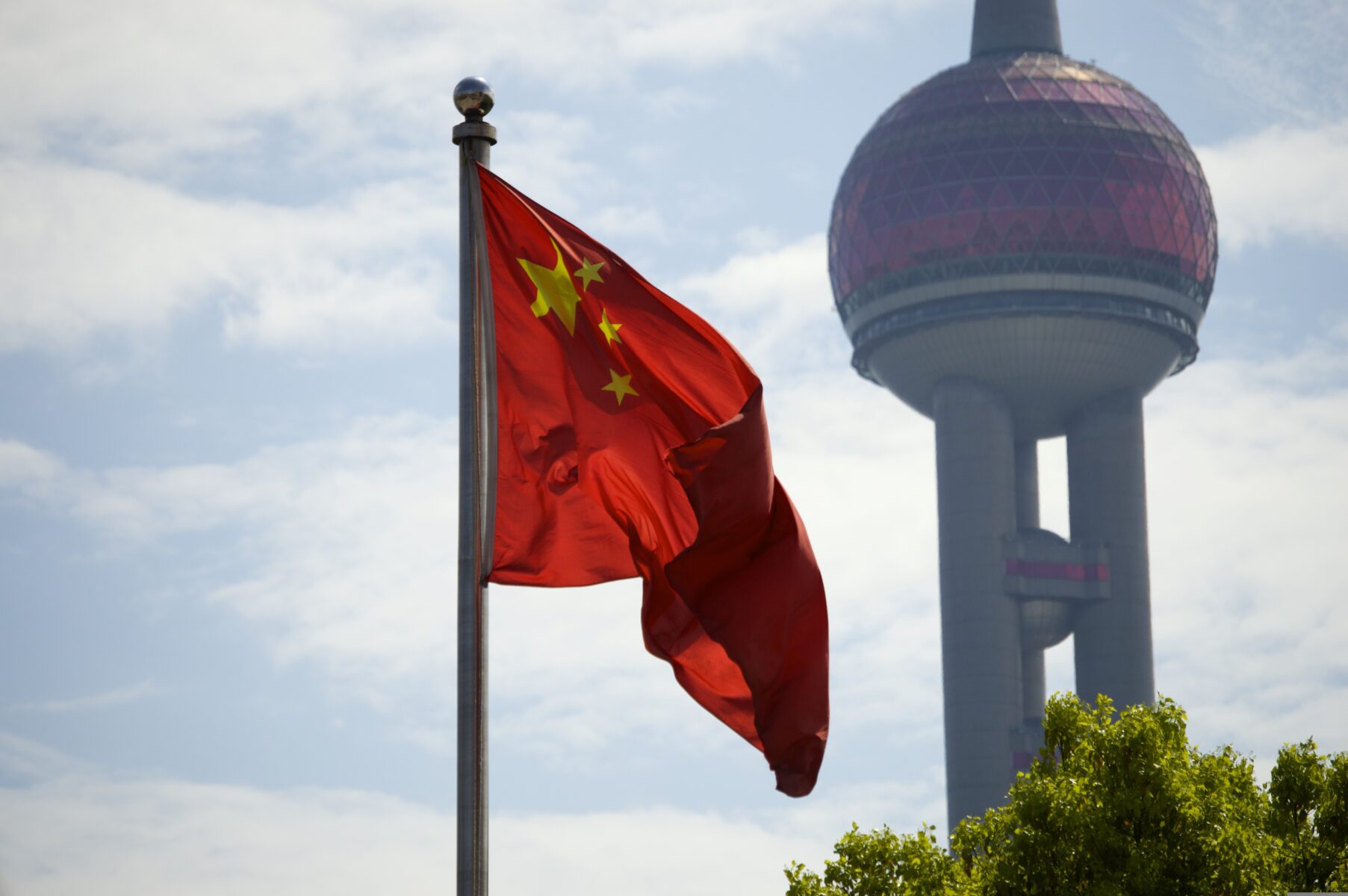
Photo: Pixabay