

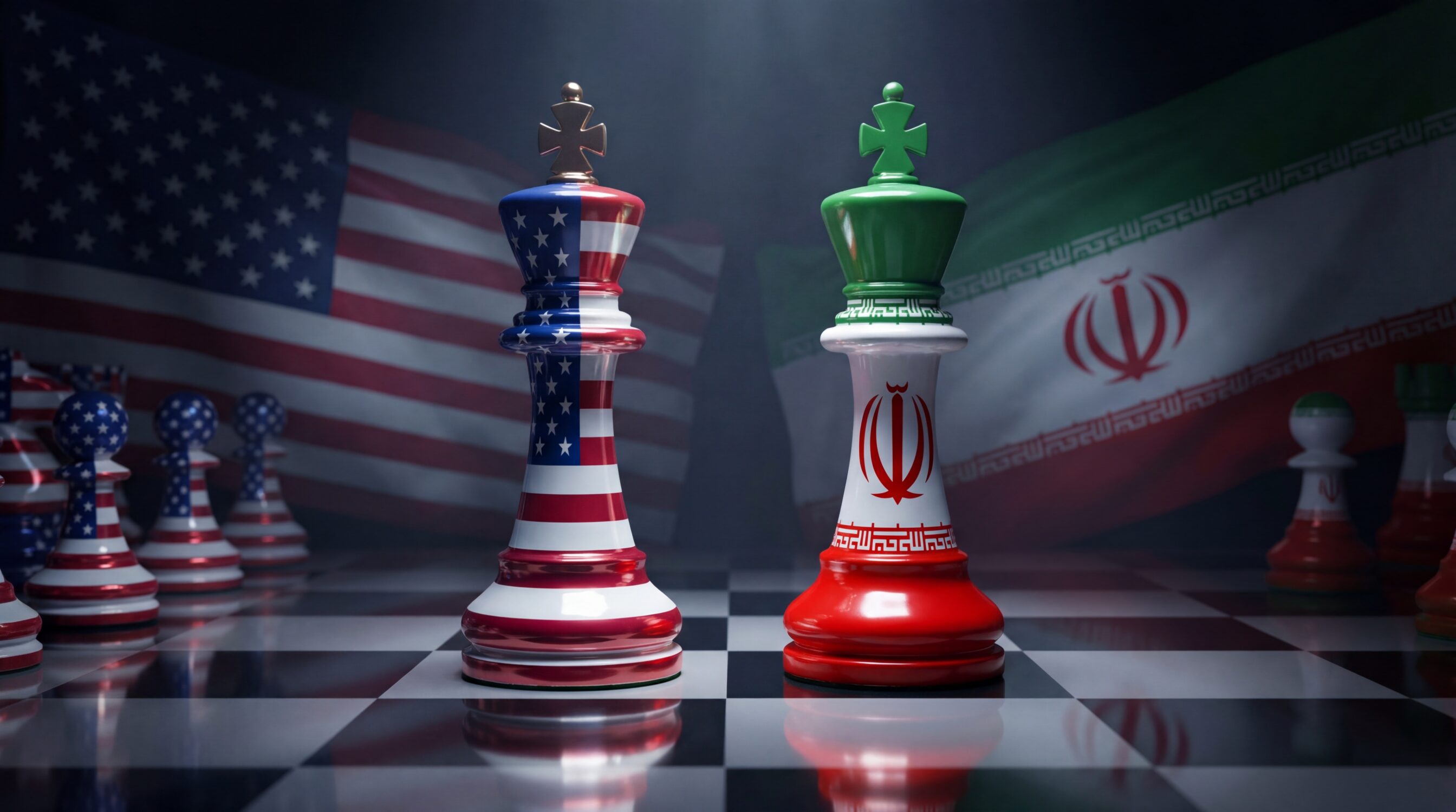
OPINION: President Trump holds all the cards for off-ramping Iranian conflict
Operation Epic Fury took everyone by surprise, and now that the United States is locked into the intense conflict in the Middle East, the best bet for de-escalating the situation is to ensure that America and Israel’s objectives are entirely aligned.
Opinion-editorial by Summer Lane | March 20, 2026
This week, the U.S. military has successfully struck more than 7,800 targets in Iran and destroyed or damaged over 120 Iranian naval vessels, according to the U.S. Central Command.
As Operation Epic Fury closes in on its third week, President Donald Trump is under intense pressure to bring the conflict to a close as quickly as possible. This, of course, is much easier said than done. Now that the U.S. has joined Israel in an active combat operation against the Iranian regime, there are few options on the table for how this war can end – and several of them bode ill for the United States.
But President Donald Trump has the tools he needs to succeed totally on this mission simply by taking practical, measured steps toward de-escalation.
Iran ‘destroyed,’ but still punching back
There is no doubt a significant degradation of Iran’s defense industrial base, and a serious decrease in Iran’s ability to strike back at the United States. The regime has been relentlessly hammered for three weeks, and according to Secretary of War Pete Hegseth, the mission remains “unchanged, on target, and on plan.”
During a Thursday press briefing, the secretary said the United States was “winning decisively and our terms” and noted at one point, “the results speak for themselves.”
Truly, there has been significant and quick progress made in this fight, but the cost has been heavy: so far, 13 U.S. servicemembers have lost their lives.
And, although the operation against Iran has been “Militarily WON,” as President Trump stated on Friday, Iran has not been completely neutralized, as evidenced by the regime’s devastating retaliatory strike on Qatar LNG facilities this week, following a reckless – and lone-wolf – Israeli strike against the Iranian South Pars gas and oil field.
Certainly, Iran’s strength has diminished, but they still pose a threat. If there were no threat left, the strike wouldn’t have happened, and what’s more, the Strait of Hormuz wouldn’t still be such a sticking point.
And so, while the Pentagon and the White House rightfully project strength and confidence on the part of the U.S. military – there is truly no military like it in the world – the reality is that the fight is not over yet.
One key step to de-escalation is to bring Israeli objectives into U.S. alignment
America’s joint ally in this military operation, Israel, has very different objectives from those of the United States. This is extremely obvious. The U.S. objectives include destroying Iran’s defense industrial base and its ballistic missile capabilities, taking out the Iranian Navy, and ensuring Iran does not obtain a nuclear weapon.
Israel’s goals and objectives are very different. “The objectives that have been laid out by the president are different from the objectives that have been laid out by the Israelis,” Director of National Intelligence Tulsi Gabbard stated this week during an intelligence community testimony before lawmakers.
Israel has seemed to lean toward targeting specific Iranian leadership, and they continue to strike Iranian energy infrastructure. This has caused problems for the United States. President Trump has been careful to avoid hitting oil infrastructure thus far, and to that end, to bring this conflict to a close, it would be great if there were some kind of Iranian leadership body left intact to negotiate with. Alas, Israel continues to wipe out the majority of the Iranian leadership chain.
“Their Navy’s gone, their Air Force is gone, their anti-aircraft is all gone, it’s all gone,” President Trump remarked on Friday, per LindellTV. “Their radar’s all gone. Their leaders are all gone. The next set of leaders are all gone. And the next set of leaders are mostly gone. And now, nobody wants to be a leader there anymore. We’re having a hard time. We want to talk to them, and there’s nobody to talk to! …And you know what? We like it that way.”
His quip was funny, but it does pose an important question: how can the U.S. bring this conflict to a close if everyone in Iran is dead? In the wake of absent leadership, chaos could quickly reign in Iran, and new, more hostile contingencies could rise from the ashes, hardened and motivated by the death of their Supreme Leader, Ayatollah Ali Khamenei, and the incapacitation of his son and successor, Mojtabe.
A power vacuum in Iran poses a very real threat – and gives the Trump administration very few people to choose from when it comes to appointing a successor in this eventual regime change.
It seems that the Israeli forces are waging an entirely separate war from the United States, which paints an extremely complex picture of this modern battlefield. It also threatens American interests – Americans who do not want to engage in an expansionist takeover operation on behalf of Israel, but who simply want to see Iran denuclearized.
A shift in the winds
According to Prime Minister Benjamin Netanyahu, Iran has no ability to produce a nuclear weapon at this time. “After 20 days, I can tell you — Iran today has no ability to enrich uranium, and no ability to produce ballistic missiles,” he stated during a Thursday press conference, via The Times of Israel.
And, in a sign that President Donald Trump has worked behind-the-scenes to bring Israel into alignment with the U.S., the prime minister stated publicly that Israel acted alone in its attack on the South Pars gas field – an attack that precipitated Iranian aggression on Qatar LNG. He also said Israel would hold off on further attacks at the request of President Trump.
This is a great sign that moves the region closer to de-escalation.
However, Netanyahu commented during his presser that he envisioned a future where gas pipelines would flow West through the Arabian Peninsula and into Israel, avoiding the chokepoint of the Strait of Hormuz, per TTOI.
This comment is telling and certainly seems to bluntly illustrate the end goal on the part of the Israelis: achieving dominant regional hegemony.
There’s nothing wrong with the Israelis seeking such an expansion – all nations wish to grow and expand – but the question that America must face is how far is the U.S. military willing to go to ensure Israel emerges as the new power of the region? Is that objective aligned with America’s best interests?
And what will it take to ensure that Iran will never rebuild its military? Because Iranian hostile power players will try, if given the chance.
“[Iran’s] conventional military power projection capabilities have largely been destroyed… [its] strategic position has been significantly degraded,” Gabbard said during his comments this week. “…The IC assesses that if a hostile regime survives, it will likely seek to begin a years-long effort to rebuild its military, missiles, and UAV forces.”
Now that the conflict has gone kinetic and the U.S. military is bearing the brunt of this operation, the only person who can navigate these dangerous and confusing waters is President Donald Trump. He alone holds the cards to not only curbing Prime Minister Netanyahu’s expansive objectives, but in managing negotiations with a badly bruised – but dangerously angry – Iranian regime.
The United States must avoid further escalation, avoid deploying ground troops to the region, and do everything in its power to facilitate the flow of oil through the Strait of Hormuz as quickly as possible.
If anyone can thread this delicate geopolitical needle, it’s President Trump – but it must be done quickly, before any more regional, and potentially global, damage is done.
Photo: Adobe Stock