
SAVE AMERICA ACT: POTUS massively pushes voter ID legislation on heels of his 2020 election speech
President Trump delivered a pointed speech less than a week ago about the 2020 election and the possible foreign influence that may have hurt it. With that political momentum behind him, he is again pushing for the SAVE America Act to pass in Congress.
Analysis by Summer Lane | July 20, 2026
The SAVE America Act has been a sticking point for President Donald Trump. He has repeatedly called on Republican lawmakers in the Senate to terminate the filibuster to push the legislation to a vote. Still, senators have been gun-shy about resorting to such a desperate measure.
The SAVE America Act is the foundation for an election integrity overhaul in the United States. It would codify voter ID to vote in federal elections, require proof of citizenship to vote, and ban mail-in ballots in most (but not all) cases.
As reported by LindellTV, the filibuster in the U.S. Senate would need to be “nuked” for the legislation to be brought to the floor for a simple majority vote, amid Republicans’ razor-thin majority.
After several failed attempts to attach the SAVE America Act to a budget reconciliation bill earlier this summer in the Senate, U.S. House Speaker Mike Johnson (R-La.) has worked with Republicans to kick-start an effort to tack on the voter ID bill to the current budget reconciliation framework.
“We need Voter Photo ID (Identification!), Proof of Citizenship and, hopefully, No Corrupt Mail In Ballots (except for illness, disability, Military, or travel),” the president wrote in a statement.
He continued, “I am asking all House Republicans to VOTE YES this week on the Budget Resolution, which is an important first step towards getting a Budget Bill. House Republicans must UNIFY, and fight for THE SAVE AMERICA ACT!”
Political momentum?
President Trump delivered a speech last week centered squarely on the possible role that foreign actors have played in influencing domestic American elections, and the alleged actions that U.S. intelligence has taken to downplay those efforts.
His administration declassified government documents that seem to show that the People’s Republic of China had access to American election systems or data – and that U.S. intelligence agencies refused to tell the president about it in 2020.
“[The declassified documents] show that over a period of years starting during the 2020 election cycle, the People’s Republic of China carried out what is believed to be the largest compromise of election data in history – resulting in China’s illicit acquisition of 220 million U.S. voter files,” the president said last week.
Such shocking allegations – with documents to go along with them – should trouble all Americans. Foreign influence is one thing, but internal actors who could potentially be helping them access American elections are even worse.
These revelations set the president up with some political momentum this week as he asked Republican lawmakers to pass the SAVE America Act, noting the importance of securing America’s election systems.
According to Politico, Speaker Johnson is racing the clock to pass this budget resolution – the House is scheduled to go on recess in just four days.
The president has also asked Republicans to include aid to American farmers in the bill, as well as military funding.
A new strategy from Speaker Johnson
The 2026 midterm elections are the linchpin for why President Trump is likely pushing for this legislation so hard. With just months to go until key races unfold across the country, a voter ID bill’s passage would be a powerful bit of political capital to carry into those races for Republicans, particularly as the war with Iran has sucked up much of the political oxygen.
Of course, passing the SAVE America Act would also help secure election processes in the U.S. and simplify them (at least on the federal level), ensuring faster vote-counting times and verified voting – an obvious win-win.
It’s hard to say if the U.S. Senate will be willing to play ball with Republicans’ potential draft of a budget bill if it includes the SAVE America Act, and whether such an item will sink the reconciliation effort.
It’s also important to note a key strategy in attaching the voter ID legislation to a budget reconciliation bill: reconciliation legislation requires only a simple majority vote to pass. This move would bypass the sticky filibuster issue in the Senate. However, the item must comply with the Byrd Rule, which means it must be determined to be a fiscal issue.
As reported by LindellTV, the SAVE Act failed during the June reconciliation effort partly because of this.
To sidestep this sand trap, Speaker Johnson and House Republicans have cleverly reworked the SAVE America Act as a technical fiscal item, linking it to a grant program that states could utilize to implement the act’s federal election regulations, The Hill reported.
This is a very smart move, and while it’s a little risky, it’s good to see Speaker Johnson at least moving forward with the president’s agenda despite the difficulties.
Will the SAVE America Act pass soon?
It remains to be seen what the outcome of the midterm elections will be. If Republicans maintain majorities in both chambers, the SAVE America Act could potentially be passed any time over the next two years (although before would, of course, be much better!).
Decision Desk has projected that Democrats may be favored to recapture the majority in the U.S. House of Representatives, while Republicans will likely maintain control in the U.S. Senate. But it will be close. With redistricting taking place in key states like Texas and California, Republicans may survive the 2026 midterms without losing majorities – but it won’t be easy.
President Trump clearly wants Republicans in power right now to take advantage of their majorities and pass critical legislation before it’s too late, no matter what happens. The only question that remains is whether they will listen to him.
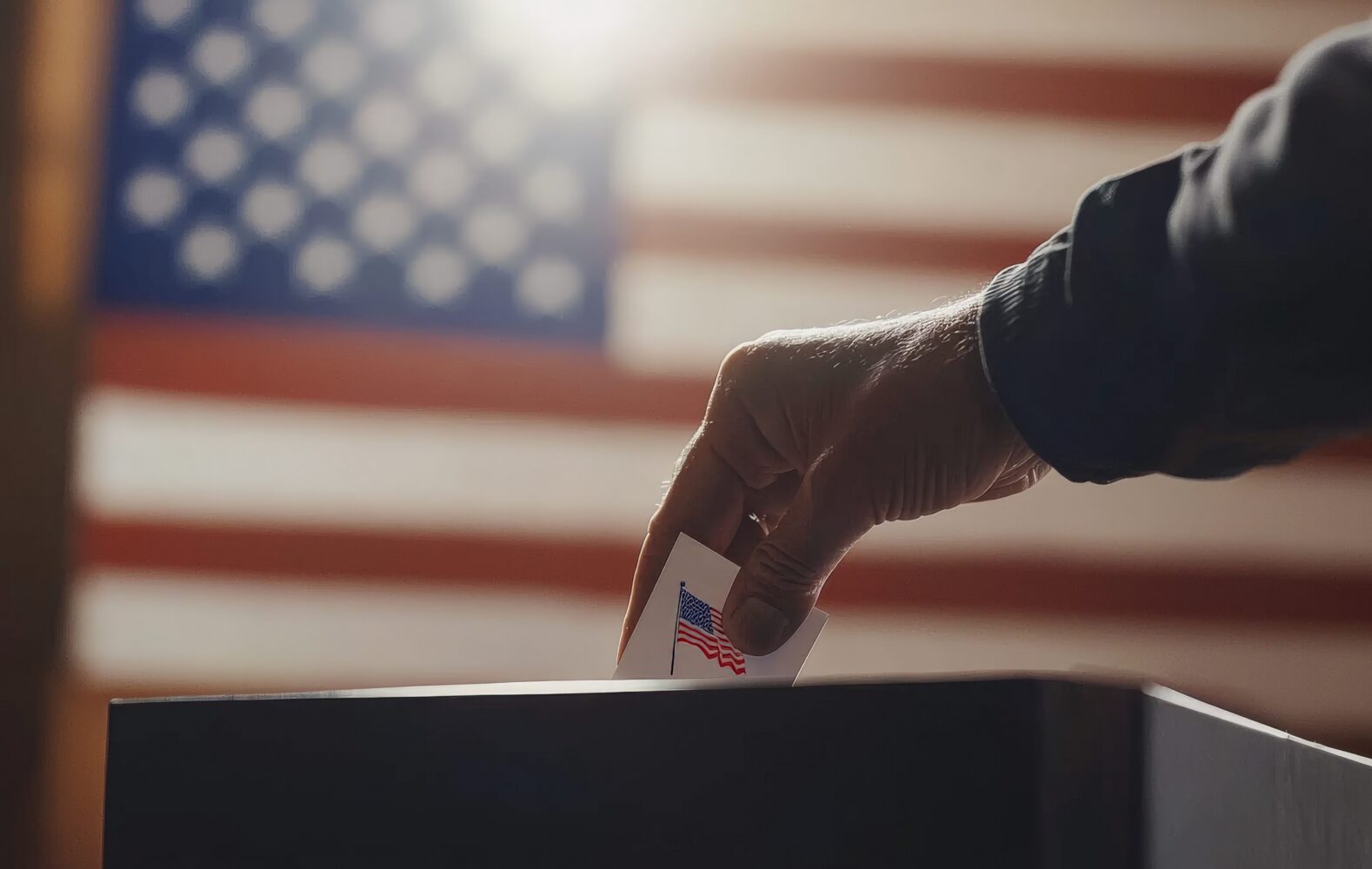
Photo: Adobe Stock