

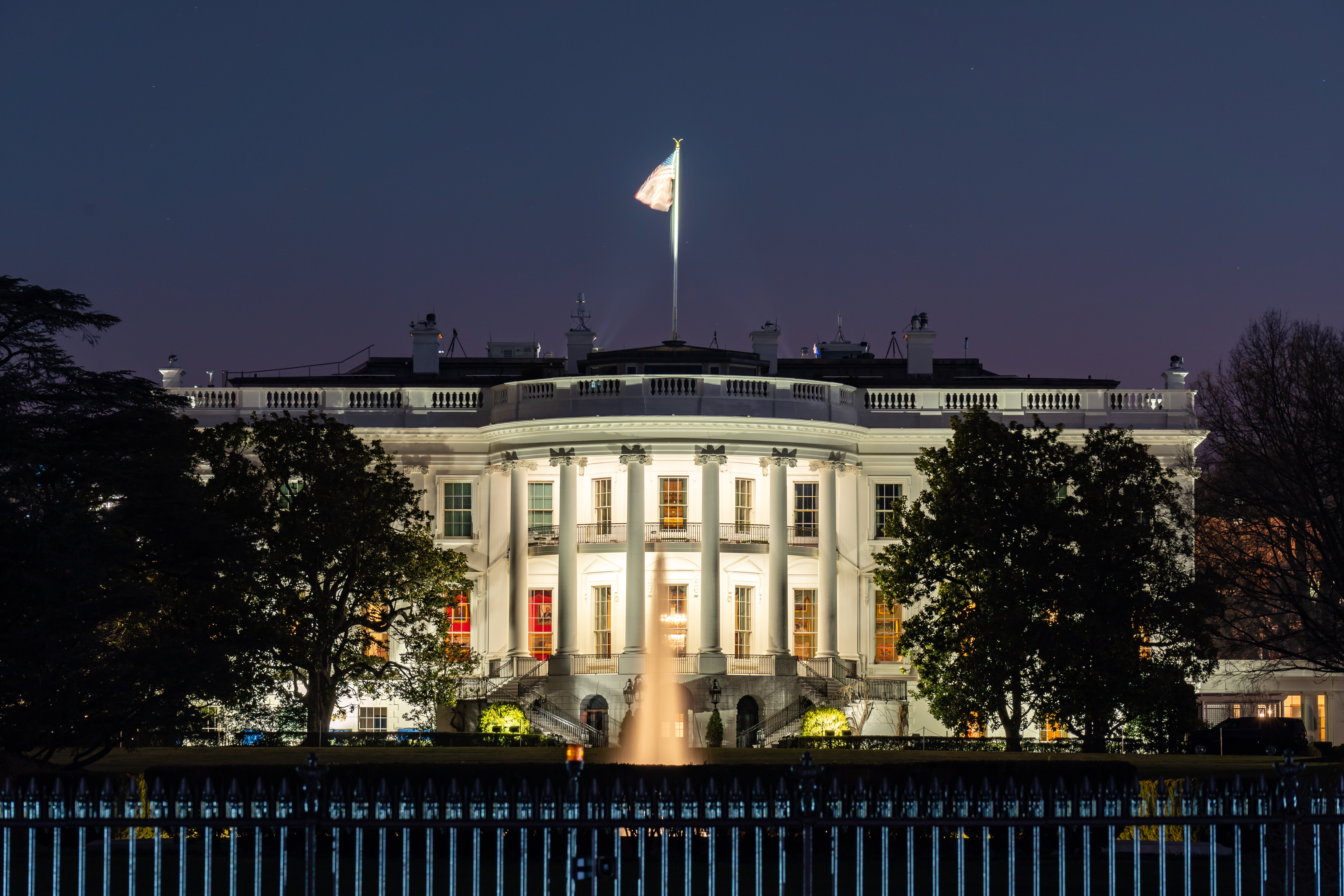
The White House has undergone many changes, this isn’t the first time
By Easton Martin | October 23, 2025
The demolition of the White House’s East Wing to make way for a new state ballroom has stirred national attention. Preservation groups have raised concerns, while the administration describes the project as a long-overdue modernization. Yet the history of the White House tells a clear story: the building has never been static. From the outside it may seem timeless, but presidents have rebuilt, reshaped, and redesigned it for more than a century.
The current project, announced under President Trump, will replace the Roosevelt-era East Wing with a large new ballroom covering roughly 90,000 square feet. The White House reports that the $300 million construction effort is being privately funded. Demolition work has already begun, and images from the site show crews removing the East Wing structure in preparation for the new addition.
The idea of altering the White House is far from new. In 1902, Theodore Roosevelt commissioned architect Charles McKim to create the West Wing, moving the president’s offices out of the main residence. William Howard Taft expanded that space in 1909 and built the first Oval Office. Franklin D. Roosevelt later reshaped the West Wing and added what became the modern East Wing in 1942.
The most dramatic transformation occurred under Harry Truman. Between 1948 and 1952, engineers found the building’s structure to be unsafe. Truman ordered the White House completely gutted, leaving only the exterior walls standing. The interior was rebuilt on a new steel frame. The home that emerged looked familiar from the outside, but inside it was entirely new.
Later presidents left their own marks. John F. Kennedy’s renovation led by Jacqueline Kennedy restored the historical furnishings and character of the interior. Richard Nixon converted Franklin Roosevelt’s indoor swimming pool into the modern Press Briefing Room. Over the decades, additional upgrades have included security reinforcements, communications centers, and modern utilities that keep the residence functional in the twenty-first century.
Each administration has adapted the White House to meet the needs of its time, whether for safety, efficiency, or ceremony. The new ballroom represents the latest chapter in that long record of change. Whatever one’s view of the project, the White House has always evolved alongside the nation it represents, reflecting the character and priorities of those who have lived within its walls.