
U.S. positioned for exit from Iran War as president takes steps to de-escalate
President Trump has taken major steps this week to end the war in Iran. With God’s help, this war may be brought to a resolution, but there is still negotiating left to do.
Opinion-analysis by Summer Lane | April 17, 2026
President Donald Trump abruptly announced early Friday morning that the Strait of Hormuz is once again open for business, declaring to the world that Iran has agreed to “never close the Strait of Hormuz again.”
Such a declaration came as a surprise, especially since the Strait has remained such a difficult point in this war against Iran. But, amid a 14-day ceasefire, it sounds like the president has managed to get Iran to the negotiating table, and a second round of peace talks will now, presumably, unfold over the weekend.
If the passage can remain open and secure, it is a major step toward peace for the entire world. It will free up the flow of energy in the region, reduce gas prices worldwide, and stabilize global markets.
In an emphatic, all-caps Truth Social post, President Trump stated, “THE STRAIT OF HORMUZ IS COMPLETELY OPEN AND READY FOR BUSINESS AND FULL PASSAGE, BUT THE NAVAL BLOCKADE WILL REMAIN IN FULL FORCE AND EFFECT AS IT PERTAINS TO IRAN, ONLY, UNTIL SUCH TIME AS OUR TRANSACTION WITH IRAN IS 100% COMPLETE. THIS PROCESS SHOULD GO VERY QUICKLY IN THAT MOST OF THE POINTS ARE ALREADY NEGOTIATED.”
The United States is currently executing a full Naval blockade of the Strait of Hormuz. The mission includes more than 10,000 U.S. servicemembers and has blocked vessels from entering or exiting Iranian ports.
While a final deal has not been inked, President Trump’s move to preemptively announce the reopening of the Strait suggests that he is confident that Iran is ready to sign on the dotted line.
POTUS has moved to constrain America’s junior partner
In a key move, President Trump announced Friday, along with the rest of his statements about Iran, that Israel was now “PROHIBITED” from bombing Lebanon. While he noted that this caveat was separate from U.S. negotiations with Iran, the two are, nevertheless, intrinsically connected.
Israeli pursuit of Hezbollah in the region has increasingly complicated negotiations for the U.S. The ongoing war waged by Israeli forces has continually destabilized the region, resulting in thousands of deaths and ongoing bloodshed between the two nations.
Thankfully, a 10-day ceasefire, which appears to have been largely brokered by U.S. Secretary of State Marco Rubio, was announced this week, and now, Lebanese and Israeli leaders will begin direct talks for the first time in decades.
This is great news for American interests and for the stability of the Middle East. The situation grew unimaginably tense over the past few weeks, and it’s time for things to cool down.
When asked by a reporter on Thursday about the historic conflict between Lebanon and Israel, President Trump said that one thing would make the difference: “Me. I’m the difference.”
Let’s hope he’s right.
Joe Kent, the former director of the National Counterterrorism Center (whom President Trump has pointedly criticized), remarked on X, “It appears that a historic deal is within reach, and it will hold if President Trump is willing to enforce the restrictions he’s placed on Israel. This post indicates a good start—but it must be followed by actually limiting U.S. military aide to Israel.”
Starmer, Macron, and Meloni are eager to send help…after the fact
On Friday, UK Prime Minister Keir Starmer, Italian Prime Minister Giorgia Meloni, and French President Emmanuel Macron indicated that they would send a naval defense mission to the Strait of Hormuz to secure freedom of navigation.
Up to this point, European powers have been unwilling to get involved in the Middle East conflict, so this sudden change of heart seems to indicate that the Strait is, indeed, reopening in earnest, and that the brunt of the war may be over.
“Classic!” remarked Fox News host Laura Ingraham on X, mocking European leadership. “Arriving at the scene of a four alarm fire with a garden hose after the fire department has already put out the flames.”
President Trump has criticized NATO as being a “paper tiger” on multiple occasions for the duration of this war, slamming the coalition for refusing to help the United States.
He fired off on Friday, “Now that the Hormuz Strait situation is over, I received a call from NATO asking if we would need some help. I TOLD THEM TO STAY AWAY, UNLESS THEY JUST WANT TO LOAD UP THEIR SHIPS WITH OIL. They were useless when needed, a Paper Tiger!”
The aftermath
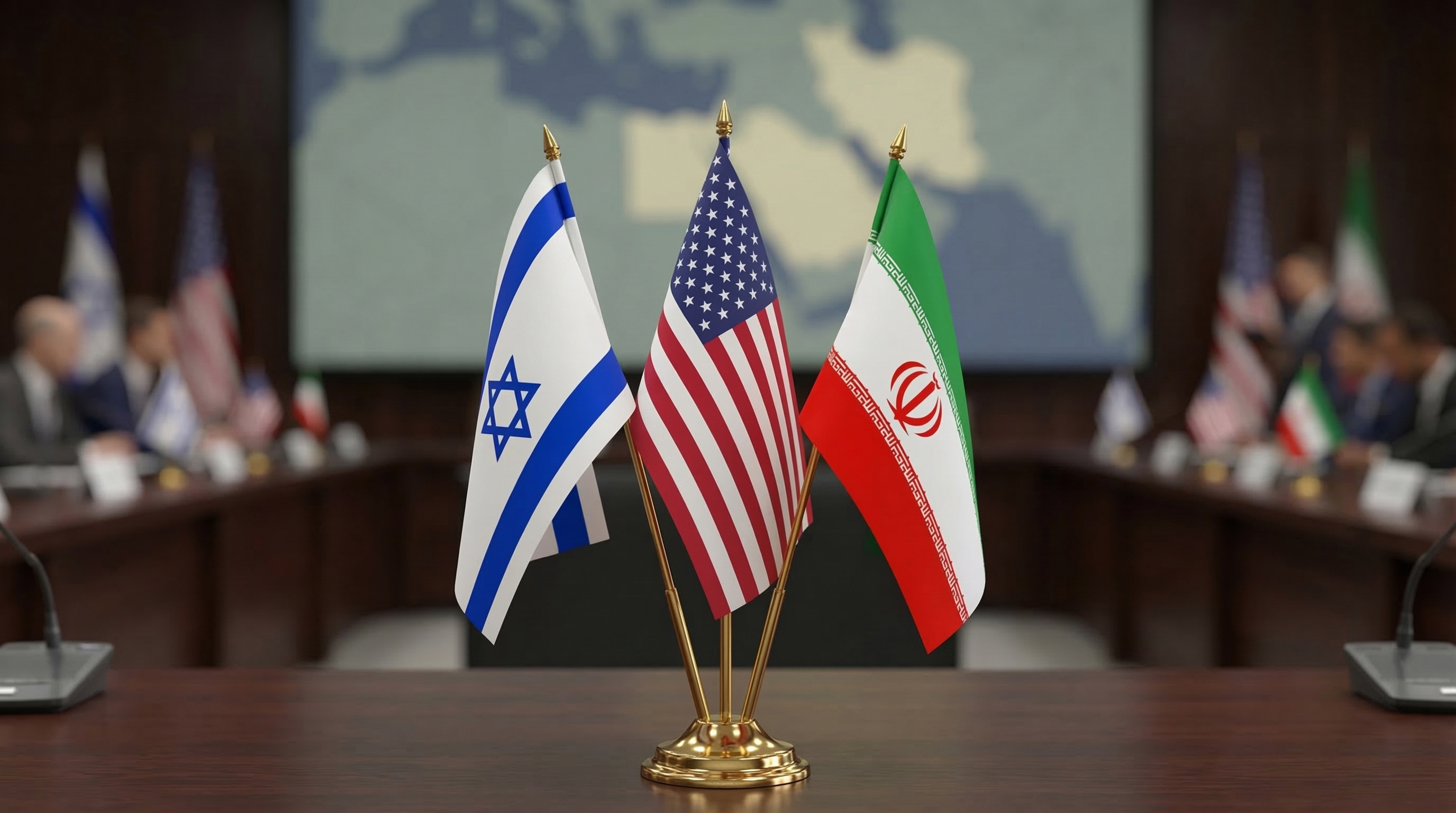
To be clear, a final deal has not yet been inked between the United States and Iran. As reported by LindellTV, there is a potential three-page deal on the table right now, with one key ask: Iran must completely stop uranium enrichment.
Initial reports indicated that, in return, the U.S. may consider unfreezing $20 billion in frozen Iranian funding, but President Trump has denied that this is the case.
“I just spoke to the President on the phone. He said Iran has agreed to an ‘unlimited’ suspension of its nuclear program and that the US is not going to release any frozen Iranian funds,” reported Kate Sullivan for Bloomberg.
Sullivan reported that the president had also not yet decided whether Vice President J.D. Vance would lead the next round of peace talks with Iran:
“‘Most of the main points are finalized. It’ll go pretty quickly,’ the President said when I asked whether the Iran deal had been finalized. He said in-person talks will ‘probably’ take place this weekend,” Sullivan posted.
The end of total war is something to be celebrated. If President Trump can efficiently bring this conflict to a quick close, the world, and especially Americans, will be much better off.
Photo: Adobe Stock