

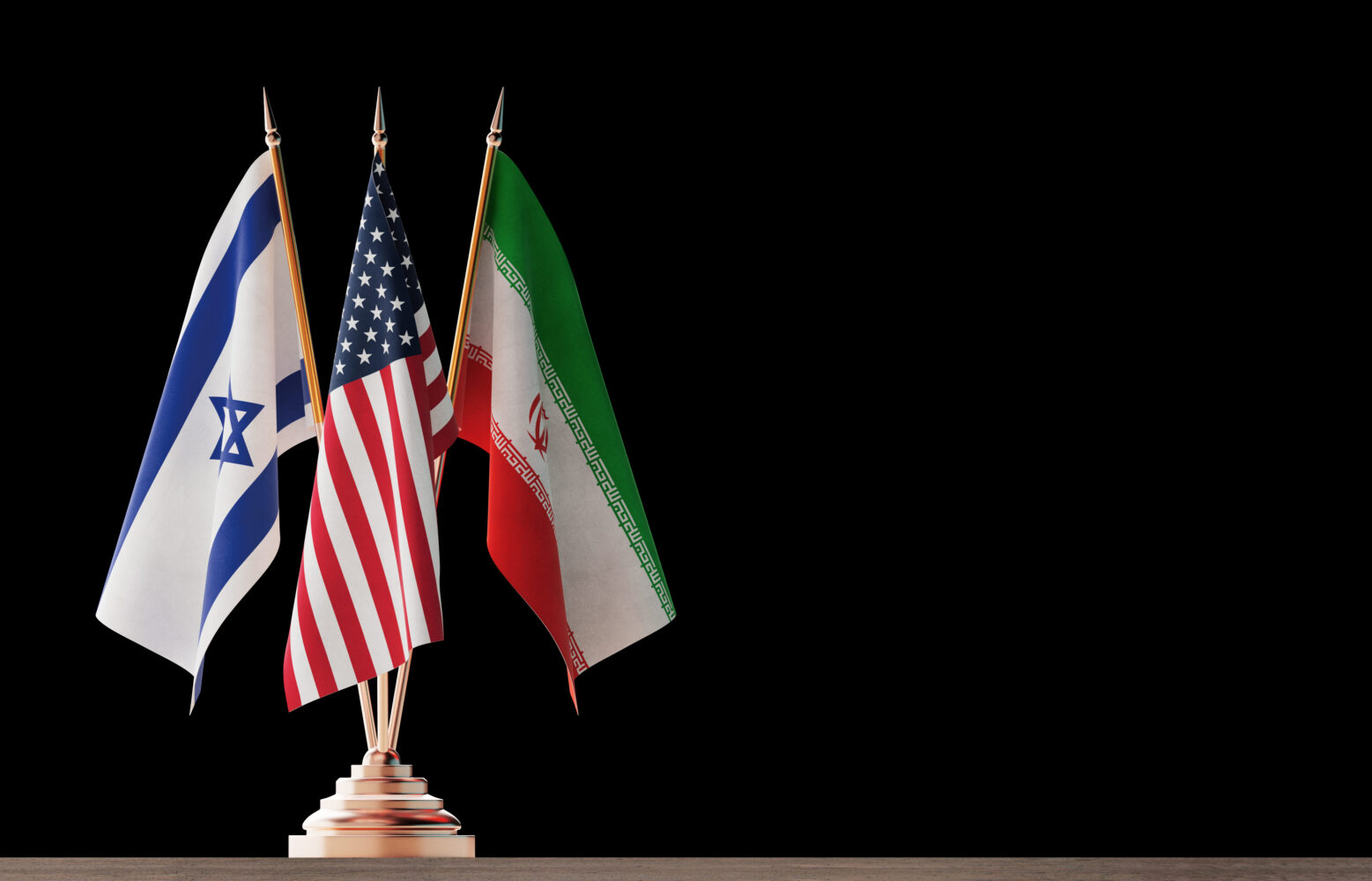
OPINION: Failed Islamabad talks likely due to difficult red lines, joint partnership turbulence
After Vice President J.D. Vance announced that the peace talks in Pakistan this weekend produced no fruitful deal, Americans were left wondering what would happen next. Why would the U.S. be unable to make a deal to end the war?
Opinion-analysis by Summer Lane | April 13, 2026
Over the weekend, anticipated peace talks in Islamabad, Pakistan, failed to secure a permanent conclusion to the conflict with Iran.
The talks were led by Vice President J.D. Vance and flanked by Special Envoys Jared Kushner and Steve Witkoff.
After 21 hours of negotiations, Vance said there were “substantive discussions,” but they had not yet reached an agreement. As it stands right now, Iran has chosen to decline the United States’ terms.
How could this happen? Amid a tenuous and rapidly diminishing ceasefire, how could the United States fail to secure a meaningful peace solution with Iran? America has been locked in war since February 28, and as oil prices rise and the global marketplace destabilizes, bringing the war to a quick end is in everyone’s best interests.
The failure to secure a peace deal this weekend is likely due to increasingly difficult demands from the United States and Israel, spurring a highly incentivized and wounded Iran to hold its ground.
What is President Trump’s ‘red line’ with Iran?
President Trump has historically held a singular red line when it comes to Iran: they cannot be allowed to have a nuclear weapon. He has repeated this often over the years. And in 1990, he gave a lengthy interview to Playboy magazine in which he revealed just how much the thought of nuclear weapons dominated his thinking:
“I’ve always thought about the issue of nuclear war; it’s a very important element in my thought process. It’s the ultimate, the ultimate catastrophe, the biggest problem this world has, and nobody’s focusing on the nuts and bolts of it. It’s a little like sickness. People don’t believe they’re going to get sick until they do. Nobody wants to talk about it. I believe the greatest of all stupidities is people’s believing it will never happen, because everybody knows how destructive it will be, so nobody uses weapons. What bullshit.”
President Trump’s stance on Iran’s nuclear program has remained largely unchanged, but in this second term, he is reportedly pushing for the complete termination of Iranian enrichment capabilities.
According to TIME, a U.S. official told the outlet that several red lines have been set by the White House on these talks, including a caveat that has failed to work in the past: Iran must end all uranium enrichment. Other red lines reportedly not agreed to were ending the funding to Iranian militant groups and fully opening the Strait of Hormuz, toll-free.
Of these “red lines,” ending enrichment capacity is the most difficult to enforce. It seems impossible that the United States could monitor domestic uranium enrichment in Iran without deploying ground troops to the region or at least remaining active in the region – something that war hawks circling in D.C. know all too well.
This caveat could lead to a protracted conflict and draw U.S. servicemembers into a ground deployment that, like the Middle Eastern missions of the 2000s, resulted in decades of searching for nonexistent weapons of mass destruction.
The 2015 JCPOA, the Iranian nuclear deal negotiated by President Barack Obama, allowed minimum uranium enrichment at a monitored and capped level. This 2015 deal was terminated by President Trump for a variety of valid reasons during his first term, as he argued that it didn’t do enough to constrain Iran’s nuclear ambitions.
President Trump’s demand for zero enrichment was introduced during his first term, but never finalized. Iran was just not willing to give it up. And last year, Iran Deputy Foreign Minister Majid Takht-Ravanchi made Tehran’s position clear: “Our position on enrichment is clear and we have repeatedly stated that it is a national achievement from which we will not back down.”
Regardless, the United States has since alleged, widely based upon Israeli intelligence assessments, that Iran has been rebuilding its nuclear arsenal. It is this suspicion that sparked Operation Midnight Hammer last summer and ultimately led to the launch of Operation Epic Fury in late February 2026.
It seems obvious that Iran’s own red line is that it will not agree to “zero” enrichment. Hence, negotiations have reached a stalemate.
The complexities of joint partnership
The United States’ longstanding friendship and alliance with the nation of Israel has remained a quintessentially American highlight for decades. Many American presidents have gladly extended a helping hand to the Holy Land and sought to ensure their safety and security within a very aggressive and highly hostile region of the Middle East.
However, now, the United States military is tied together with the IDF and Prime Minister Benjamin Netanyahu – and both nations have intrinsically different objectives.
America has sought to accomplish three major objectives: destroy Iran’s ability to launch or produce missiles, take out the Iranian Navy, and stop it from being able to obtain a nuclear weapon.
These objectives have been met, per the President of the United States, and as such, America is looking for a ceasefire and an off-ramp.
For Israel, the stakes are much higher and much different. Israel has seized this moment to look toward territorial expansion. Netanyahu seeks to not only decapitate Iran, but to seize control of Lebanon (the IDF has been striking Lebanon harshly over the past several days). The prime minister is also openly picking fights with Turkey and Spain, lending further destabilization to the geopolitical sphere.
For America, the goals were simple; these objectives were achieved, and the president is clearly looking for an exit, otherwise a ceasefire would not have happened, and neither would the talks in Islamabad have taken place.
For Israeli Prime Minister Netanyahu, the war is just getting started.
This unbalanced partnership is dangerous for the United States. Every time an opportunity for peace arises, America must contend with its junior military partner, who continues to launch blistering missile attacks across the Middle East, further destabilizing the region.
Netanyahu is deeply involved in this operation, as would be expected, but it raises an integral question: are America’s “red lines” in the best interests of the United States, or are they in the best interests of a foreign nation?
“I spoke yesterday with Vice President J.D. Vance,” said Netanyahu during a recent cabinet meeting, per Axios’s Barak Ravid. “He called me from his plane on his way back from Islamabad. He reported to me in detail, as this administration does every day, about the development of the negotiations.”
Such detailed involvement, and the prime minister’s phraseology of an American vice president reporting to him, has understandably drawn criticism. This ceasefire negotiation is between the United States and Iran, and should stay that way, since the U.S. is the senior partner in this operation.
The situation has become increasingly tense, and as Americans pressure the Trump administration to bring an end to this conflict, it seems that the U.S.-Israel partnership is complicating matters.
This must be addressed immediately. Negotiations will likely remain unfruitful until it is.
Meanwhile, the U.S. Navy has moved to blockade the Strait of Hormuz to stop Iranian port-bound vessels from traversing the channel, and President Trump has renewed his threat to annihilate Iran, with just days left in the ceasefire.
The United States must behave as the sovereign nation that it is and act in its interests, and its interests only, at this critical moment in time. What is best for the United States benefits the entire world – and it benefits Israel, as well.
A world at peace is better for everyone. But to reach that peace, the U.S. may need to adjust its purported stance on Iranian enrichment capabilities, and it may even have to allow Iran to charge a toll on the Strait of Hormuz.
Is that option a complete win for the United States? No. But it’s a win for peace, and it could at least stop the continuation of total war, which is ultimately far worse and far more destructive.
Photo: Adobe Stock