
Understanding the details of Trump’s federal takeover of D.C.
The president’s federal takeover of the nation’s capital has ruffled political feathers and sparked a discussion about the parameters of federal authority
Opinion-editorial by Summer Lane | August 12, 2025
President Donald Trump’s decision to place Washington, D.C., under federal control has stirred many questions: How many National Guardsmen will be in the city for the coming weeks? How long can the president assume control of the D.C. Metropolitan Police Department? And, most importantly, is crime really so bad in the nation’s capital that a federal takeover is warranted?
The situation in D.C. has been brewing for years, and Trump’s move to clean up the streets is not a surprise. As far back as 2023, the president vowed to utilize federal assets if necessary to crack down on crime in Washington, and just a handful of months into his second term, he’s doing exactly that.
What is the ‘Home Rule’ Act?
To take over the District of Columbia, President Trump invoked Section 740 of the District of Columbia Home Rule Act, which was established in 1973. Section 740 of this act gives the president operational control of the Metro Police Department “with respect to the special conditions of an emergency nature.” The U.S. Attorney General is responsible for overseeing the police department. In fact, AG Pam Bondi met with D.C. Mayor Muriel Bowser this morning amid coordination between the DOJ, city government officials, and the police department to ensure smooth operations.
The president can maintain control of the police force for 48 hours under this section, “unless the President has, prior to the expiration of such period, notified the Chairmen and ranking minority members of the Committees on the District of Columbia of the Senate and the House of Representatives, in writing, as to the reason for such direction and the period of time during which the need for such services is likely to continue.”
It is therefore reasonable to conclude that this takeover will last longer than 48 hours. Section 740 notes an expiration of such powers upon the end of the declared emergency, or after 30 days have passed. Congress can also act to terminate the president’s powers upon passage and enactment of a law from a joint resolution, per the section.
How many National Guardsmen will be in D.C.?
About 800 National Guardsmen have been deployed to D.C. by President Trump. These members began arriving on Tuesday morning and will likely continue to roll into the city throughout the week.
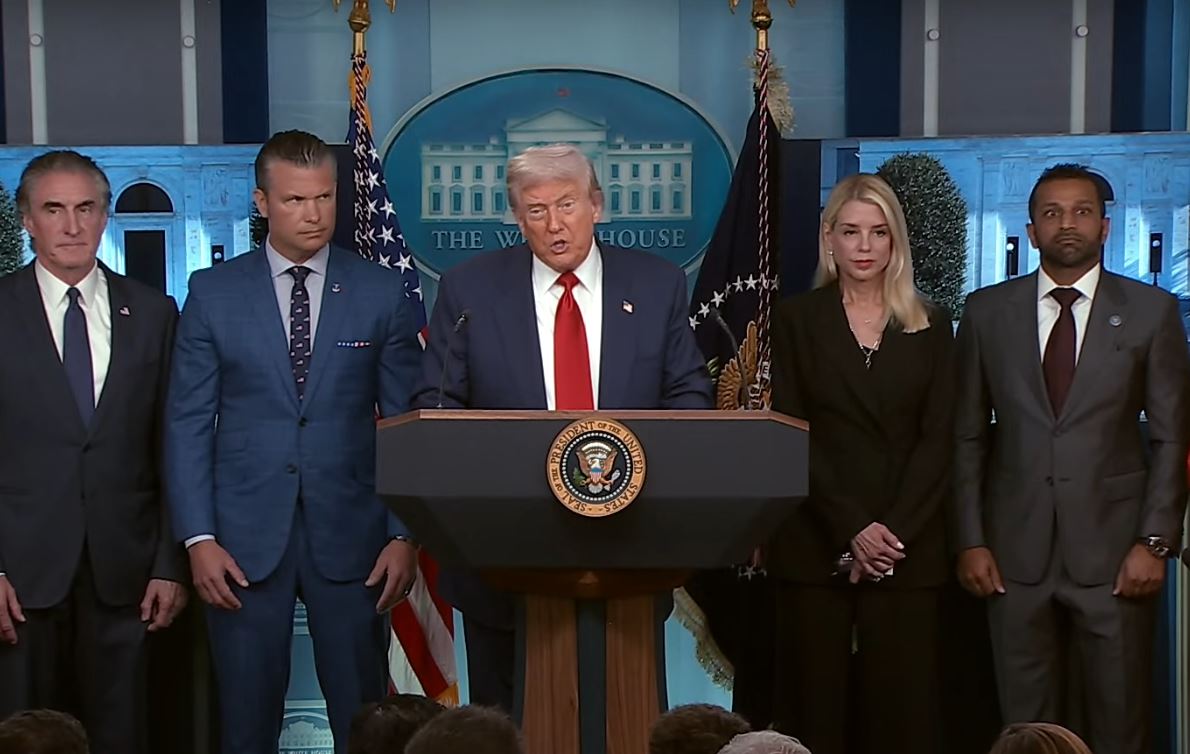
During a press conference on Monday, Trump explained that these guardsmen will “help re-establish law and order and public safety in Washington, D.C., and they’re going to be allowed to do their job properly.”
Trump’s authority over the D.C. National Guard is stronger than his control over the guards in the States – those guardsmen answer directly to their respective governors. As noted by Politico, the president may federalize state guardsmen for emergencies, but the D.C. guard – because it is not a state – is under the “direct control of the president.”
It is unknown how long the guardsmen will remain in D.C., but at the very least, they will likely be there for at least 30 days.
Is crime really that bad?
Mainstream media has virally pushed the claim that crime in D.C. is down, but is it? Consider these statistics, shared by the White House:
- In D.C., there were 27.3 homicides per resident in 2024,
- The murder rate in D.C. is three times higher than in Islamabad, Pakistan,
- Nearly 30,000 reported crimes in D.C., of which over 3,400 were violent,
- So far in 2025, there have been almost 16,000 total crimes in the city, including more than 100 homicides,
- A 547 percent increase in carjackings between 2018 and 2023,
- And perhaps most shockingly, if D.C. were a state, the White House said, it would have the “highest homicide rate of any state in the nation.”
Regardless of mainstream claims, most D.C. residents are probably eager for a return to basic law and order in their city.




![Washington DC, District of Columbia, United States of America [ US White House, lawn and garden behind the fence, tourist visitors in the street ]](https://lindelltv.com/wp-content/uploads/2026/10/AdobeStock_316724535-1-236x133.jpeg)