

What caused the fatal crash of UPS flight 2967?
By Easton Martin | November 5, 2025
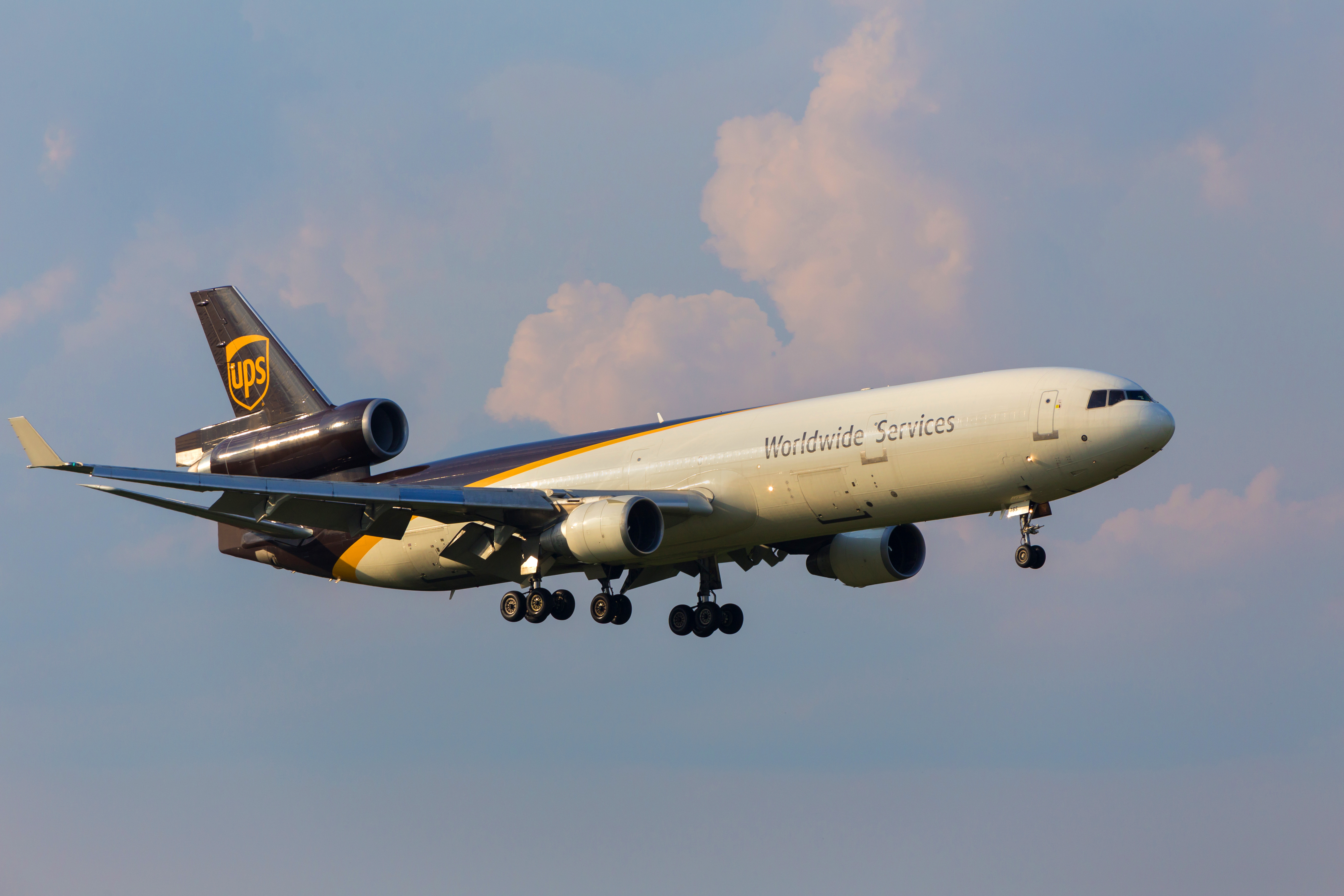
The crash of a UPS McDonnell Douglas MD-11 cargo aircraft departing Louisville International Airport has renewed scrutiny of the aging tri-jet and raised questions about structural reliability, maintenance practices, and the aircraft’s storied safety record. Flight 2976 was departing for Honolulu on November 4 when the aircraft lost its left engine during the takeoff roll. Video captured by witnesses shows flames erupting near the left wing. Additional footage appears to show another engine emitting sparks as the aircraft struggled to climb.
Reports indicate that the jet never gained more than a few hundred feet of altitude before crashing roughly one mile beyond the runway, igniting a large post-impact fire fueled by its near-maximum fuel load. At least seven people on the ground were killed and several more were injured, with damage concentrated among airport-adjacent warehouses. The aircraft itself, tail number N259UP, was 34 years old and had undergone recent repairs to its fuel system while grounded earlier in the fall.
Investigators from the National Transportation Safety Board have identified the loss of the left engine and its pylon as the critical starting point in the accident sequence. The separation of an engine during takeoff is one of the highest-risk failures in aviation. When an engine detaches, it can sever hydraulic lines, damage wing surfaces, and disrupt lift on one side of the aircraft. A nearly identical chain of events occurred in the 1979 crash of American Airlines Flight 191, a DC-10, which shares direct structural lineage with the MD-11.
The MD-11 has a mixed safety record, particularly in cargo service where it remains in use decades after its retirement from passenger fleets. The type has been involved in multiple hard-landing and control-instability incidents dating back to the 1990s. However, aviation analysts caution against prematurely attributing this crash to the aircraft model alone. The engine separation could be tied to a maintenance oversight, a structural fatigue crack, or an uncontained engine failure.