

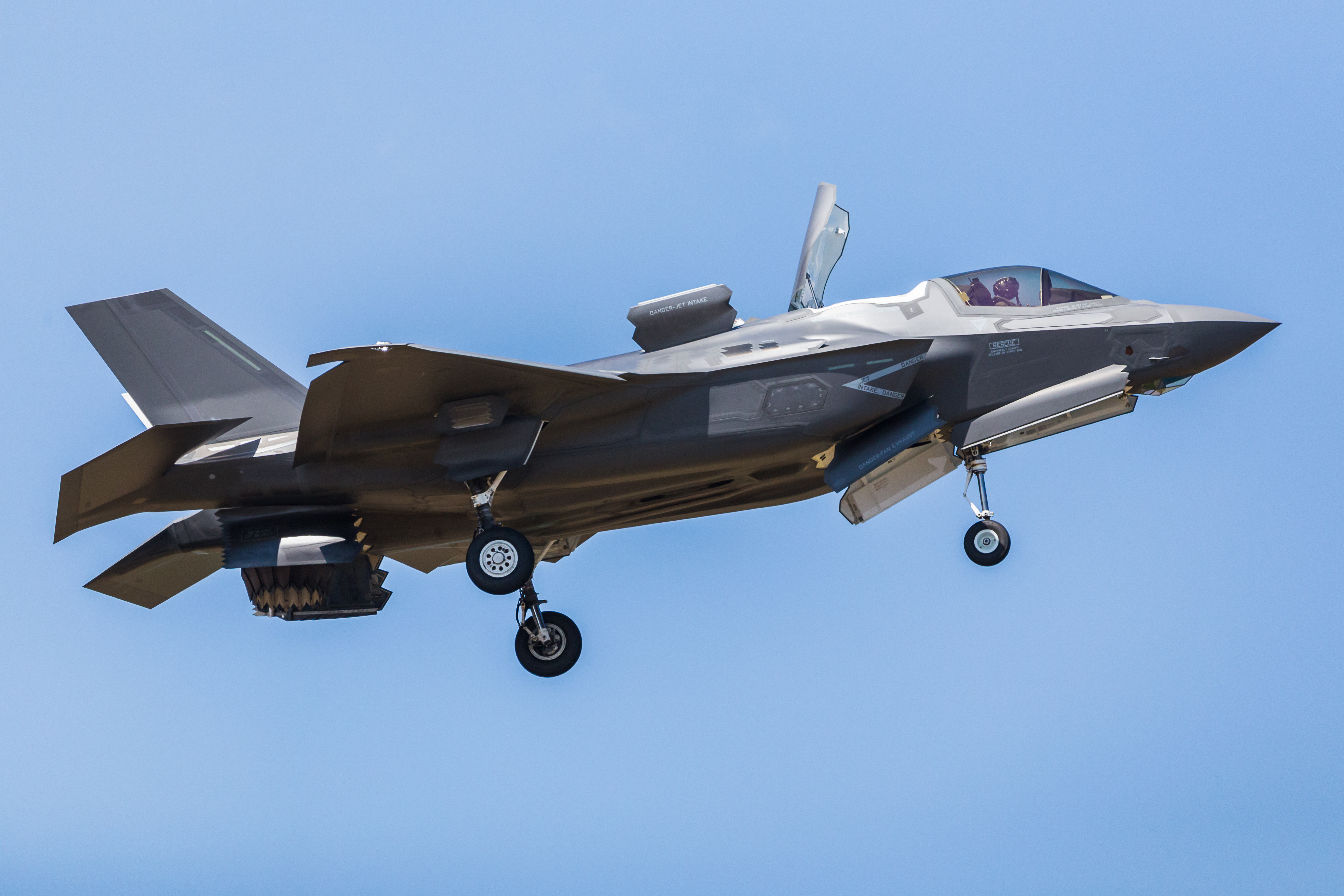
Why is the U.S. considering lifting the F-35 ban on Turkey, and why is it there in the first place?
Editorial | By Easton Martin | September 25, 2025
As President Trump meets with Turkish President Recep Tayyip Erdogan, one of the biggest questions on the table is whether the United States should make an exception to the F-35 ban imposed on Turkey in 2019. While the restrictions were rooted in legitimate concerns, there are strategic reasons today why a reassessment may serve American interests.
The ban came after Turkey purchased Russia’s S-400 air defense system. At the time, U.S. officials worried that operating both the F-35 and the S-400 could expose sensitive data to Moscow. Turkey was removed from the program, its aircraft deliveries halted, and its role as a production partner suspended. That was the right call given the risks, but the geopolitical environment has shifted.
Turkey sits at the crossroads of Europe, the Middle East, and the Black Sea. It is a NATO member with one of the largest militaries in the alliance and an important voice in regional conflicts. From Syria to Ukraine, Ankara has positioned itself as both a challenger and a broker. If the U.S. wants to prevent Turkey from sliding deeper into Moscow’s orbit, engagement may be more effective than exclusion.
An exception on the F-35 could be part of that engagement. Washington might pair it with conditions: enhanced safeguards, limits on integration with the S-400 system, or technical workarounds that prevent data compromise. By tying access to measurable commitments, the U.S. could both protect its technology and pull Ankara closer into alignment with Western security priorities.
There is also the matter of fairness. Turkey paid over a billion dollars into the program and invested heavily in production. The planes built for it remain in U.S. custody. Finding a path to resolve that dispute, even partially, could reduce tensions that have weighed on bilateral ties for years.
Of course, caution is warranted. Any move would have to satisfy Congress, reassure other allies, and guarantee the protection of F-35 capabilities. Yet diplomacy often requires weighing risks against the potential gains. In this case, the gain could be renewed leverage with a NATO partner that straddles two worlds.
Reconsidering the F-35 ban does not mean abandoning prudence. It means recognizing that the strategic landscape has changed. If an exception can be crafted that preserves security while strengthening ties, it may prove not a concession, but an investment in America’s long-term position.