
War or peace: which path will prevail?
President Donald Trump is faced with a very serious decision when it comes to the war with Iran: will he wind down the conflict, or will he return to escalation? Here’s how it could play out.
Opinion-editorial by Summer Lane | May 1, 2026
Much has been said about Friday’s 60-day deadline under the War Powers Act. Under this 1973 law, President Donald Trump must determine whether he will continue the war in Iran or whether he will seek congressional authorization to continue combat.
It’s a cut-and-dried legal obligation, but the reality is somewhat different than what the media presents. While the deadline is important, Congress has not formally declared war since June 1942.
All other U.S. conflicts, like the Vietnam War or the Iraq War, were authorized via military force resolutions. President George W. Bush, for example, obtained such an authorization via the Authorization for Use of Military Force Against Iraq Resolution in 2002, which was passed by Congress and then signed into law by the president.
“Iraq will either comply with all U.N. resolutions, rid itself of weapons of mass destruction, and in its support for terrorists, or it will be compelled to do so,” Bush said in a statement at the time. “I hope that Iraq will choose compliance and peace, and I believe passage of this resolution makes that choice more likely.”
The language is eerily similar to President Trump’s present comments, in which he says, often, that Iran must not be allowed to have a nuclear weapon (they do not, according to Israeli and U.S. assessments at this time). Otherwise, he has threatened to obliterate the country on multiple occasions.
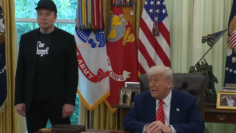
“Well, there are options,” the president said Friday morning. “Do we want to go in and just blast the hell out of them forever? Or do we want to try and make a deal? I mean, those are the options.”
President Trump’s options with Iran, diplomatically, teeter precariously between peace and annihilation, and he’s no doubt feeling tremendous pressure to end the war as soon as possible in the wake of Americans’ broad distaste for the conflict.
POTUS says he’s not happy with Iran, Americans reject war
President Trump on Friday said he was unsatisfied with what Iran has brought to the negotiating table. “They want to make a deal, but I’m not satisfied with it,” he said.
This push-and-pull between the United States and Iran has continued for weeks. Negotiations have been nearly impossible, due to the fractured internal structure of the Iranian regime, thanks to military strikes that eliminated the power structure in the region.
So far, the U.S. has been unable to obtain a unified response. According to the president’s comments on Friday, there may even be as many as four factions competing for power in Iran now – creating a vortex of confusion and, almost certainly, a massive diplomatic headache.
What does this mean in terms of a possible timeline for the war? President Trump, technically, has a one-shot opportunity to extend the deployment of U.S. troops abroad by 30 days, as reported by LindellTV. In that timeframe, he will be heavily pressured to seal a permanent deal with Iran. If he cannot do so within that period, he will either have to retreat from Iran or seek some kind of congressional declaration of war or limited scope resolution.
According to recent polling, the Iran War is broadly unpopular with Americans, so the president is likely feeling the scalding pressure to bring U.S. servicemembers home before the war reignites and spirals out of control.
Indeed, with 61 percent of Americans expressing that military action in Iran was a “mistake” (Washington Post/ABC-Ipsos), it seems clear that President Trump is searching for an escape hatch from this war.
Other options
President Trump indicated on Friday that he would not seek congressional approval for military actions in Iran, which may give Americans a hint as to what the future holds. If he does not feel that he needs to go as far as obtaining authorization from Congress, he may feel confident that he can wind down the war within the next 30 days.
That, of course, is the best-case scenario at this moment.
The worst-case scenario is that the ceasefire breaks and the situation escalates again, becoming a quagmire, and mission creep sets in. This is not what the American people want, nor is it what Americans need.
The burden of this responsibility – bringing America back from the precipice of what could be World War Three – rests on President Trump. He made the decision to launch the war against Iran, and he must make the decision on whether to re-engage militarily or pull out of the region.
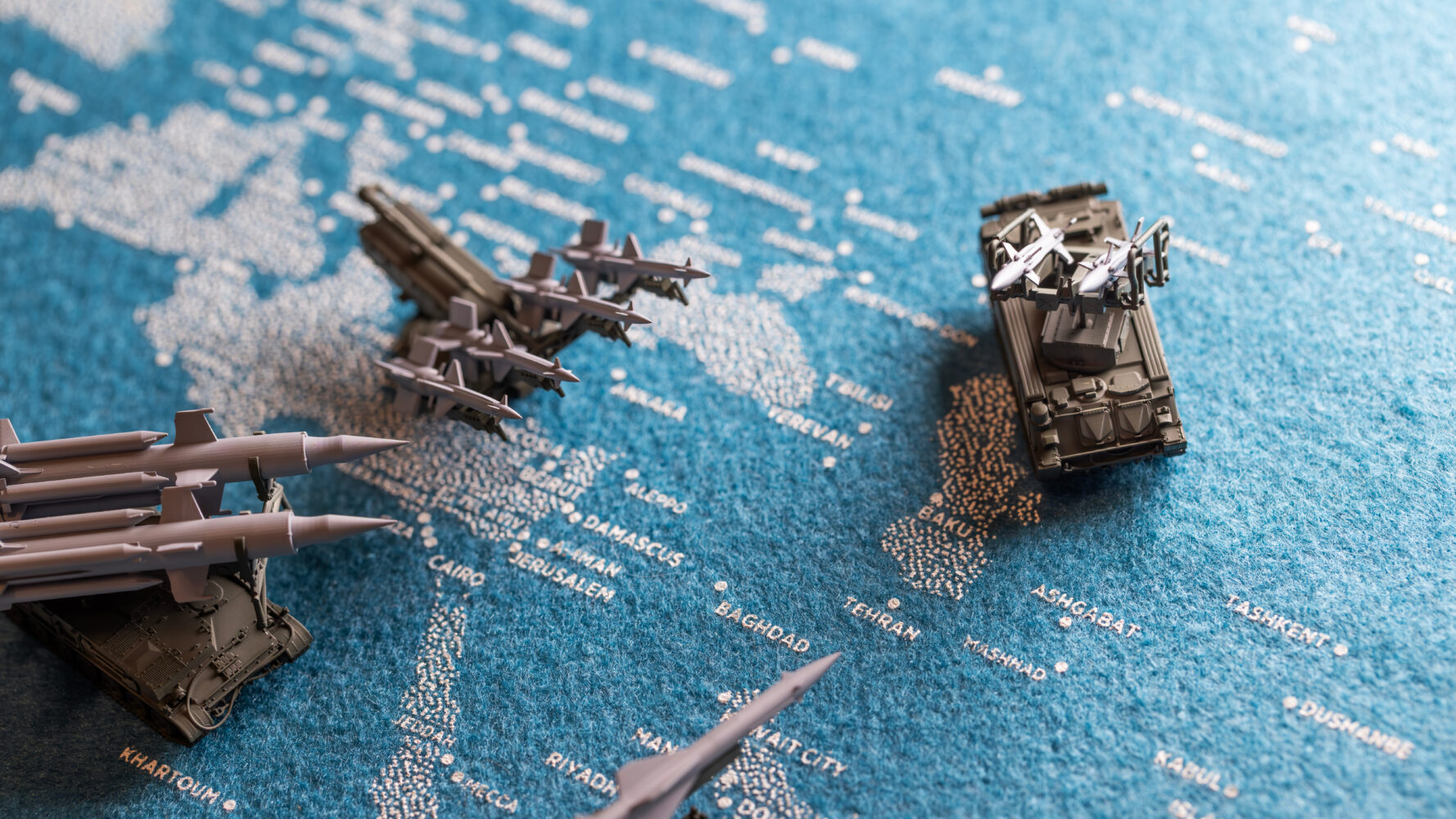
Photo: Adobe Stock