
What to know about the new multi-billion-dollar framework between the U.S. and Australia
Monday’s new deal between the United States and Australia may surprise some, but it makes sense: both countries have crucial items to offer the other
Analysis by Summer Lane | October 20, 2025
On Monday, President Donald Trump sealed the deal on yet another trade-based agreement with a friendly country, securing American access to critical rare earth minerals while offering a valuable exchange.
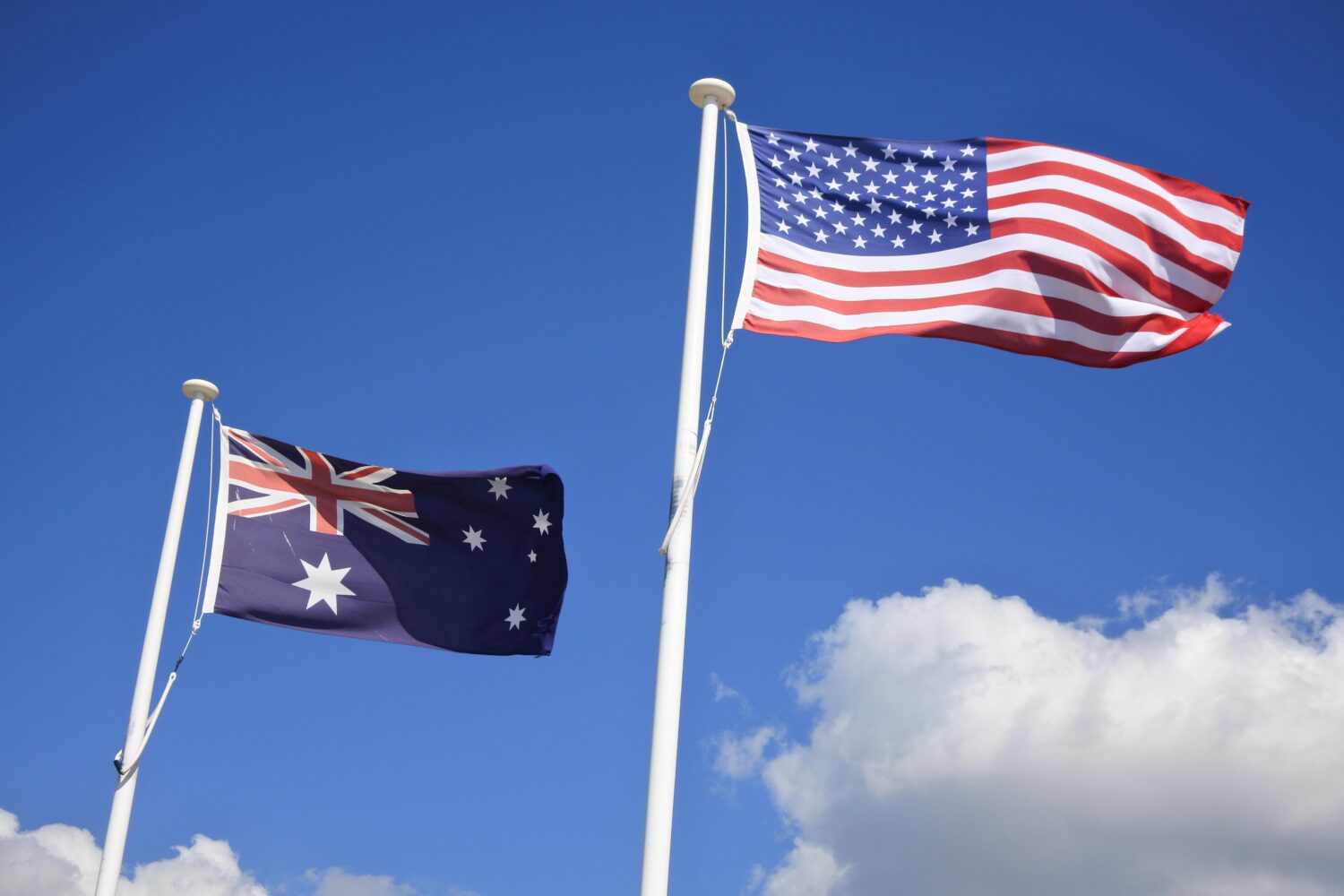
The president signed a multi-billion-dollar agreement with Australia at the White House, where he was joined by Australian Prime Minister Anthony Albanese. “We are discussing critical minerals and rare earths, and we’re going to be signing an agreement that’s been negotiated over a period of three to four months,” President Trump said.
The framework solidifies a strategic military and defense partnership with Australia, in exchange for the ally nation’s critical minerals and rare earth elements – something President Trump has consistently pursued for the United States since taking office in January.
“In about a year from now we’ll have so many critical minerals and rare earths you won’t know what to do with them – they’ll be worth about $2,” President Trump joked during Monday’s bilateral lunch with the prime minister.
Why are rare earth elements and minerals so important? And what did the United States promise Australia in exchange for access to these valuable components?
A trade focused on strategic partnerships
The president’s agreement with Australia is a fair trade between two nations. The deal will unfold over the next six months and will result in recoverable resources for the United States worth an estimated $53 billion, according to the White House.
The Department of War will also invest in a gallium refinery in Western Australia, projected to produce 100 metric tons per year.
Gallium is used widely in the production of electronics like smartphones.
While it may seem silly to invest in something like this, the world has become increasingly dependent on rare earth elements to sustain a rapidly developing technological landscape.
According to the U.S. Department of Energy, there are just 17 rare earth elements on the periodic table, and each one contributes to the production of needed technology like magnets, batteries, and computer chips.
It’s easy to see why these elements are essential to maintaining American dominance in every area.
Additionally, Australia has agreed to purchase over $1 billion in American-built submarines, and another $2.6 billion purchase of Apache helicopters. This comes amid a $1 billion defense contribution to the U.S. federal government from Australia to expand the U.S. submarine industrial base, according to the White House.
“Australia’s superannuation funds will increase investments in the United States to $1.44 trillion by 2035—an increase of almost $1 trillion from current levels,” the White House stated in a fact sheet summarizing Monday’s deal.
A Biden-era deal with a Trump-era closer
During Monday’s meeting with the Australian prime minister, a reporter highlighted the origins of Australia’s deal with the United States regarding submarine production and purchasing.
This deal was inked in September 2021, during the Biden administration. Also known as the “AUKUS partnership,” it represented a commitment between the United Kingdom, Australia, and the United States to strengthen each government’s defense interests and technology sharing.
In 2023, AUKUS member countries “announced an optimal pathway to produce nuclear-powered submarine capability in Australia at the earliest point while ensuring all three partners maintain the highest non-proliferation standards.”
According to President Trump, despite the 2023 commitment, “nobody did anything about it.”
He told the press on Monday, “It was going too slowly…we’re starting that process right now.”
Continued good faith relations with Australia and the world
Amid a world rumbling with problems, it is significant that President Trump continues to forge peaceful, trade-based relationships around the globe. Even China – with whom the United States, at times, has had tenuous ties – has come to the table to negotiate.
“We have a very good relationship with China,” President Trump told the press, when responding to questions about whether China would view Australia’s military partnership with the U.S. as somewhat threatening.
“I think we’ll be just fine with China,” President Trump said. “…We have the best equipment, we have the best of anything, nobody’s going to mess with that. I don’t see that at all with President Xi.”
President Trump said he expected to end up with “a very strong trade deal” as a result of his upcoming meeting with President Xi in South Korea – a meeting scheduled for next month.
It’s this kind of hardball diplomacy – peace through strength – that is helping the United States get back on its feet after years of turbulent and often insipid leadership from the Biden administration.
It proves that, if the United States has the right leaders, deals can be made, money can pour into American coffers, and even the most unlikely countries will negotiate.
Photo: Adobe Stock