
1492 still matters: Columbus Day honors the starting point of the American empire
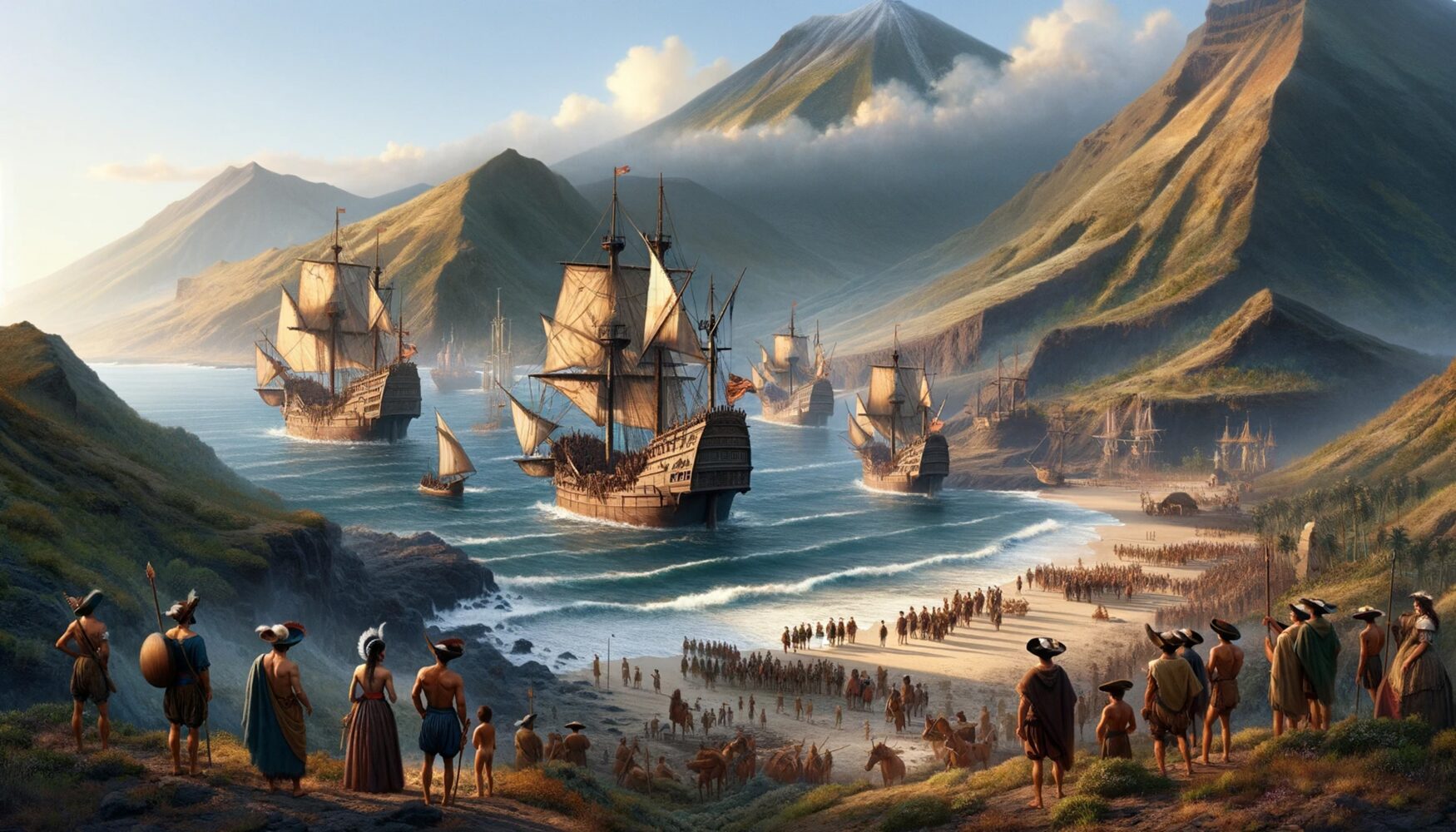
Christopher Columbus’s epic journey across the seas with three ships and 90 men led to the beginning of western exploration and expansion. His story matters, because history matters – and so does the truth.
Opinion-editorial by Summer Lane | October 12, 2026
This year, the White House has doubled down harder than ever on the celebration of Columbus Day, and for good reason: Christopher Columbus’s exploratory voyages and initial discovery of San Salvador was the beginning of America’s story.
Columbus began his epic voyage in 1492. The goal? Find a western route to reach Asia. What he found instead was the scant edges of a burgeoning New World.
In all, Columbus took four major voyages that pushed the limits of known exploration at the time. The White House has done its due diligence on this point. Americans can visit an official webpage on the White House website that lays out an interactive timeline of Columbus’s incredible adventures, which range from discovering Cuba and the Caribbean isles to becoming the first known European to set foot in Venezuela.
Over the past few years, a growing number of so-called intellectuals and scholars have accused Christopher Columbus of being a racist, a supremacist colonizer, and many other low-brow terms.
This movement stems primarily from Critical Race Theory, or CRT, which views history through the lens of oppressor versus oppressed. Professor Zeus Leonardo of the Berkeley School of Education describes it thusly: “I’d like people to know that critical race is an argument about how race and racism are baked into every nook and cranny of our society.”
CRT preaches that racism in America – in all its systems – is deeply embedded and is impossible to ignore. It rejects most Americans’ view of “colorblindness” and merit systems.
Proponents of CRT or radical academic historical rewriting view Columbus as a racist who conquered indigenous people and opened the western world to colonization and violence.
Indeed, history is rife with violence, war, death, conflict, disease, and struggle. But to pin all human problems on one singular man seems not only ridiculous, but pointedly stupid. Had Columbus not begun an age of exploration, someone else would have.
“Columbus did not ‘discover America,’ but his voyages began the Columbian exchange, a turning point in world history involving the massive transfers of human populations, cultures, ideas, animals, plants, and diseases,” wrote Leah Shafer and Bari Walsh in a 2017 article for the Harvard Graduate School of Education. “Turning points are powerful lenses through which students need to view our past.”
The degradation of Christopher Columbus by supposed lofty intellectuals in American universities is embarrassing. Columbus was an explorer who existed in a time and culture so far removed from today’s modern society that comparing him and his crew to modern Americans in New York City is not only wildly unintelligent, but downright malicious.
“Christopher Columbus is one of the great men of world history,” said Rep. Brandon Gill (R-Texas) on Monday.
He continued, “Guided by faith in Christ, our European ancestors came to the New World, settled wild lands, and built western civilization. Our history and our culture are exceptional– and we’re no longer apologizing for it.”
President Donald Trump has described Columbus, rightfully, as the “original American hero, a giant of Western civilization, and one of the most gallant and visionary men to ever walk the face of the earth.”
Before his death, the late Charlie Kirk sharply commented on Columbus’s legacy as an explorer searching for opportunities in distant lands. “Christopher Columbus was just an immigrant looking for a better life, bringing diversity to the Americas. Quit with the xenophobia already,” he quipped in 2024.
Indeed. It seems that today’s Christopher Columbus critics are perfectly fine with open borders and illegal immigration, yet they condemn Columbus’s goals to establish ports of trade in the West – an initial spark that lit the flame of Western civilization, the society in which these same critics now exist and enjoy sumptuous freedom and luxury.
In 2026, Christopher Columbus’s legacy as an explorer and the original “American hero,” as President Trump calls him, is as important as ever. History matters, because people matter, and because the truth always matters.
Happy Columbus Day.
Photo: Pixabay