
SecWar wants to livestream Fort Hood shooter execution: needed justice or sordid spectacle?
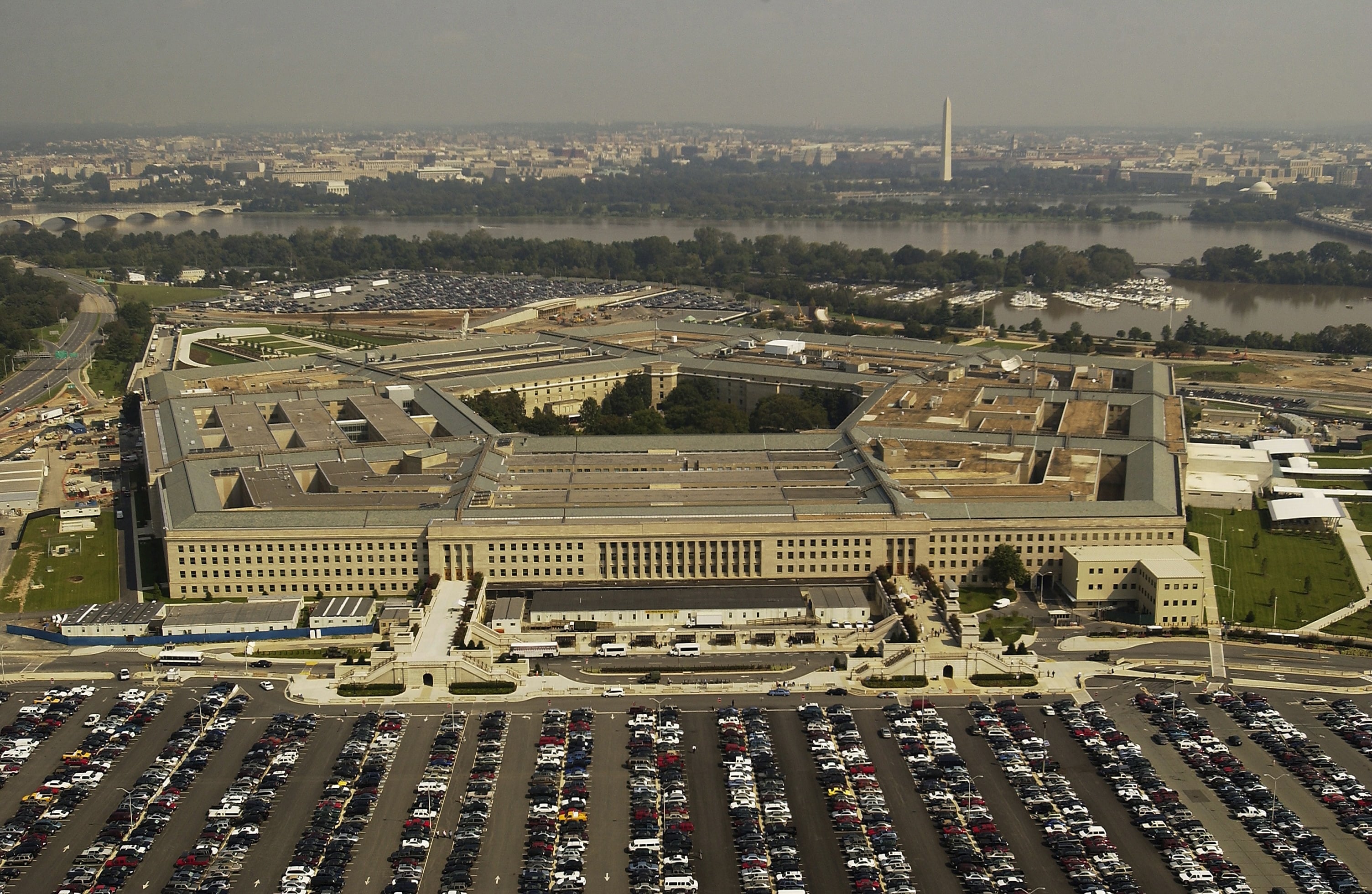
Secretary of War Pete Hegseth said this week that the Pentagon would like to livestream the firing squad execution of Nidal Hasan, the individual who carried out the Fort Hood shooting in 2009. The possible event has sparked widespread debate on the morality of such a move.
Opinion-Analysis by Summer Lane | October 9, 2026
Social media exploded with debate this week on the heels of comments from Secretary of War Pete Hegseth, who took a hardline approach to the upcoming execution of Nidal Hasan, the individual responsible for the mass shooting at Fort Hood, Texas, in 2009.
“We’ll make sure that people are able to watch it, that it’s public,” Hegseth told Real America’s Voice this week, while talking to political commentator Jack Posobiec. “Because people need to understand that there’s serious consequences for these types of things.”
According to the U.S. Army, Hasan will be executed by firing squad. President Donald Trump approved the sentence of death for the military prisoner, following a full appellate process, a conviction, and sentencing.
The execution will take place at Fort Hood at 1 p.m. CT on December 3, 2026.
Hegseth’s announcement that the execution would be broadcast kicked off a firestorm of shock and debate online. In response to a report on the U.S. military’s alleged plans to livestream the execution, Hegseth doubled down, writing on X, “Correct.”
According to most historical reports, an individual named Rainey Bethea was likely the last legal public execution in the United States. Bethea, a young Black man, was convicted of raping a 70-year-old white woman and executed by public hanging in 1936.
Certainly, such an execution is a bit different than Hasan’s situation. Hasan was a former U.S. Army Major and psychiatrist who betrayed his fellow soldiers by carrying out a mass shooting at Fort Hood, in which 13 people were killed. He also wounded dozens more.
Hasan was also acting as an Islamic extremist and was documented yelling “Allahu Akbar” when he carried out his attack at Fort Hood.
During his interview with RAV, Posobiec asked Secretary Hegseth whether Hasan had made any final requests or reached out to the president amid his pending execution.
“Don’t care,” Hegseth said pointedly. “We’ll see him on December 3rd.”
Public execution, to some, is needed justice
The concept of livestreaming a public execution has, understandably, garnered considerable debate online. While it seems like pretty much everyone agrees that Hasan, through his heinous actions, earned a justified death sentence, Posobiec, for example, argued strongly that public execution was “Biblical and moral.”
“Public execution for murderous traitors is not ‘bloodlust[,]’ he commented. “It is a display of justice[.] Biblical and moral. A public service[.]”
Texas-based Lakepointe Church Pastor Josh Howerton, who often offers theological perspectives on current events, posited online, “At the risk of getting crushed (again) this week, I’ll hesitantly point out that death penalties in the Bible were performed publicly before ‘all the assembly’ (Leviticus 24:14) This was because there was not just 1 purpose (justice) for capital punishment; there were 2 purposes… 1) Justice, AND… 2) Public deterrence, so the rest of the people ‘shall hear and fear, and never again do any such evil’ (Deut 13:11).”
Dr. Robert Jeffress, a high-profile spiritual leader who endorsed President Donald Trump, said that he supported the Pentagon’s decision to livestream Hasan’s execution.
“Capital punishment is commanded by God in Genesis 9:6 to remind people of the sanctity of human life,” he said. “The more people that can see that truth illustrated through a public execution, the better.”
Rep. Andy Ogles (R-Tenn.) also chimed in, commenting, “Excellent. Public execution is what this terrorist deserves. We will be watching.”
Many others argue against it
Public execution also evoked strong feelings among opponents. “Hasan should face the death penalty, but making his execution public and streaming it? Beyond disgusting,” decried Sen. Thom Tillis (R-N.C.). “Public executions are what oppressive dictatorships like Iran and Afghanistan do. It should not be happening in America.”
Former National Counterterrorism Center Director Joe Kent, who broke publicly from the Trump administration earlier this year over the Iran war, argued that it was “beneath the dignity & decency of our nation” to livestream Hasan’s execution.
“…Americans will use violence if and when justified, but we do not rejoice in it. Kill him swiftly & silently,” he wrote. “Streaming his execution is not just a stain on our morality—it also gives the terrorists free propaganda that they will use to radicalize & recruit more terrorists like Hassan.”
Lila Jones, a well-known pro-life figure (founder of Live Action), expressed her vehement opposition to the public execution. “We have not had a public execution since 1936,” she said on X. “Now is not the time to restart this dehumanizing practice. Conservatives who are foolishly defending this: how will you feel when the Left holds federal power again? Remember: Terrorists aspire to martyrdom — he will be another martyr for them. Repent and stop the bloodlust.”
Is there a ‘right’ answer?
The polarizing opinions about Hasan’s upcoming execution makes one thing clear: the ethicality of a public firing squad death sentence is a debate born from privilege. Public executions have long been the norm throughout millennia of history, in nearly every country on earth: Rome, Imperial China, Mesoamerica, medieval and modern Europe, and even the United States, until fairly recently, all engaged in public executions of some kind to assert power, project authority, and to deter either criminality or, in many cases, rebellion amongst the people.
Most modern-day Americans, with the exception of some U.S. military servicemembers and domestic law enforcement, have never seen war or violence or killing of any kind. The thought of a public execution is truly shocking to many people, which is fair.
The question may boil down to this: is Hasan’s execution going to be broadcast because it sends a much-needed warning to America’s enemies or to internal threats? Or is it going to be broadcast because someone in the Pentagon thinks it looks “cool” or “tough”?
It’s the motivation behind this action that ultimately defines whether it’s justified. And on that point, debate will likely continue for a very long time.
Photo: Pixabay