
U.S. moves toward potential de-escalation in Iran, although nothing is promised
President Donald Trump announced Monday that the United States is currently in talks with Iran about winding down Operation Epic Fury. Over the coming days, negotiations will critically determine whether peace reigns or destruction continues.
Opinion-editorial by Summer Lane | March 23, 2026
Negotiations with Iran have been underway for the past two days, according to President Donald Trump, and U.S. military strikes on key energy infrastructure in the region have been paused for the next five days, pending the outcome of these discussions.
This is good news for the entire world. Although Iranian media outlets – and even some Iranian officials – deny that such talks are taking place, this is likely just the Iranian way of keeping up appearances.
“BASED ON THE TENOR AND TONE OF THESE IN DEPTH, DETAILED, AND CONSTRUCTIVE CONVERSATIONS, WHICH WILL CONTINUE THROUGHOUT THE WEEK, I HAVE INSTRUCTED THE DEPARTMENT OF WAR TO POSTPONE ANY AND ALL MILITARY STRIKES AGAINST IRANIAN POWER PLANTS AND ENERGY INFRASTRUCTURE FOR A FIVE DAY PERIOD, SUBJECT TO THE SUCCESS OF THE ONGOING MEETINGS AND DISCUSSIONS,” President Trump wrote on Truth Social, early Monday morning.
Previously, President Trump had threatened to blow Iranian energy infrastructure to smithereens, to put it lightly, and so it seems that this threat was enough to get Iranian leadership, however few surviving members there may be, to the negotiating table.
This could be a very good step toward de-escalation
The key to truly “winning” this Iran war is to get it over with as quickly as possible. While one can debate the underlying motivations for why or how this war was started, one simple reality remains: this is a hot war, and whether Americans like it or not, it’s happening right now. There’s no putting the genie back in the bottle, and so, the next best step is to advocate for a peaceful resolution as soon as possible.
The longer the conflict stretches, the more tenuous it becomes – and the more damage it does not only to the GCC, but to ally countries and NATO members who are broadly affected by the closure of the Strait of Hormuz and the destabilization and violence in the region.
“We have had very, very strong talks,” President Trump told reporters Monday morning, just before departing on Air Force One from West Palm Beach, Florida.
He added, “We’ll see where they lead. We have points, major points of agreement, I would say almost all points of agreement. Perhaps that hasn’t been conveyed. The communication, as you know, has been blown to pieces. They were unable to talk to each other – but we’ve had very strong talks, Mr. Witkoff and Mr. Kushner had them.”
The president is referring here to U.S. Special Envoys Steve Witkoff and Jared Kushner, who have been shouldering the brunt of Middle East peace and foreign policy talks during this second term.
This conversation is a positive sign toward what could be a de-escalation in the region, if only the Iranian leadership is willing to pragmatically speak with the United States. However, for this to work, the U.S. must ensure that its joint military partner in this operation, Israel, does not lash out at the wrong time amid talks.
If peace is an option, Israel must support it
As reported by LindellTV, one of the greatest challenges of Operation Epic Fury has been attempting to mesh the two very different sets of military objectives held by the United States and the Israeli government.
America’s interests lie in denuclearizing and disarming the Iranian terrorist regime, which includes wiping out the Iranian Navy. Their ability to project power across the world is what the U.S. military has consistently targeted since the onset of the operation.
“The objectives that have been laid out by the president are different from the objectives that have been laid out by the Israelis,” said Director of National Intelligence Tulsi Gabbard last week.
Israel’s objectives are far more ambitious. They have struck hard at Iran’s leadership, targeted Tehran, and, according to Prime Minister Benjamin Netanyahu, have their sights set on seizing control of Iranian oil and piping it west through the Arabian Peninsula and straight into Israel. And, to intensify matters, Israel is openly expanding ground and air attacks into Lebanon, according to the BBC, purportedly against Hezbollah.
The picture may be muted, but the general idea is clear: Israel is waging an expansionist war, while America is focused on disarming Iran and achieving conflict resolution as quickly as possible.
It’s very hard to bring these two different sets of objectives into harmony, but President Trump is uniquely positioned, as one of the best dealmakers in the world, to make this happen.
“My whole life has been a negotiation, but with Iran, we’ve been negotiating for a long time, and this time they mean business,” President Trump noted during remarks in Memphis, Tennessee, on Monday afternoon. “And it’s only because of the great job that our military did is the reason they mean business. They want to settle, and hopefully we can get it done.”
Unfortunately for the U.S., PM Netanyahu indicated that, even amid negotiations with Iran, the IDF would continue to attack both Iran and Lebanon, vowing to safeguard Israeli interests in any agreement that is potentially struck.
It seems counterproductive to continue to attack Iran if the United States is trying to bring the conflict to an end – but it’s also hard to assess the full scope of the situation without knowing the private conversations unfolding behind closed doors.
At the end of the day, the best possible outcome is that all parties involved lay down their weapons, and the killing stops. Peace in the Middle East means peace for the rest of the world, and nobody knows this better than President Trump. It is key to make sure Israeli and American interests are aligned on this so that an agreement can be reached swiftly.
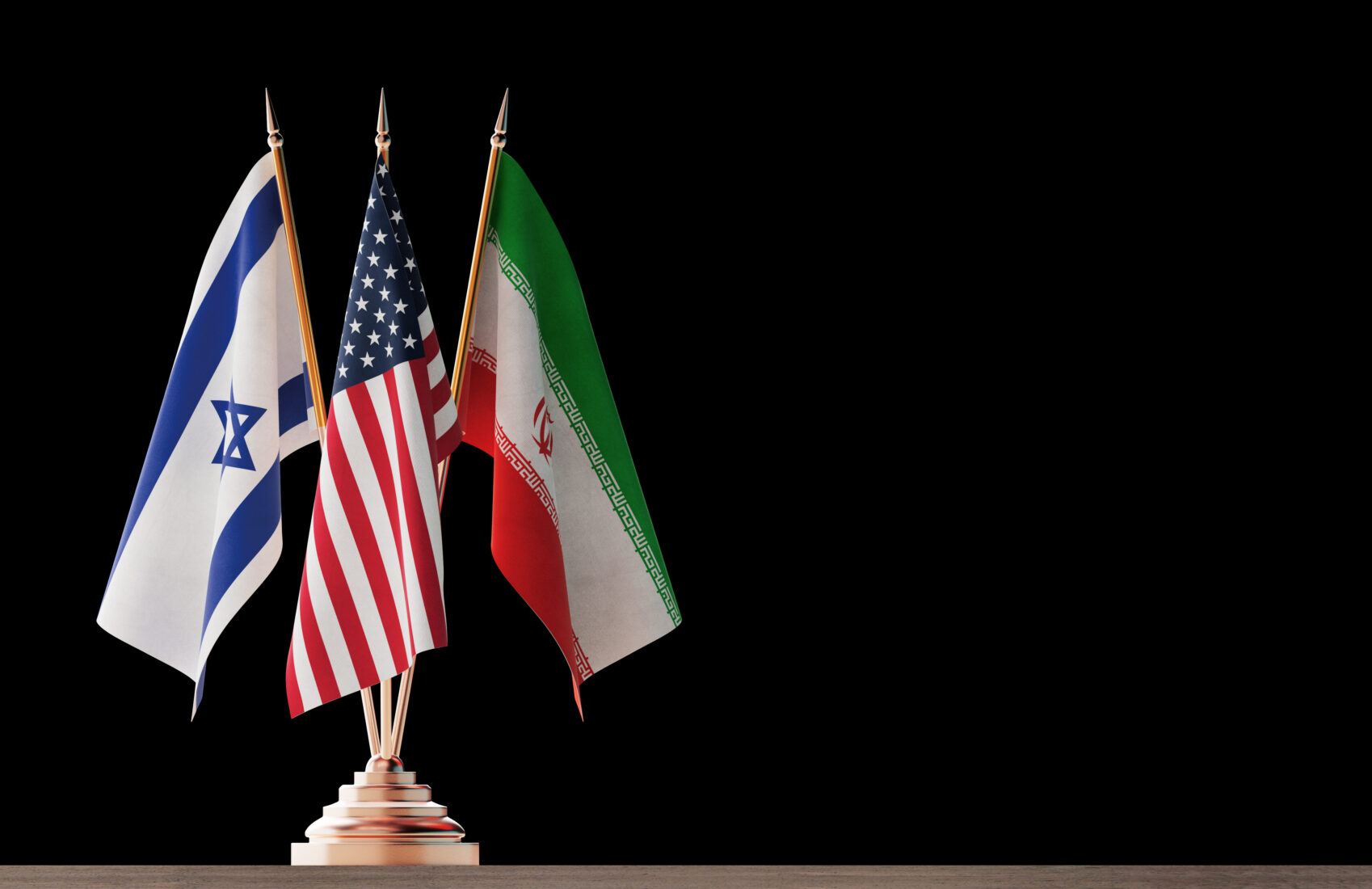
Photo: Adobe Stock