

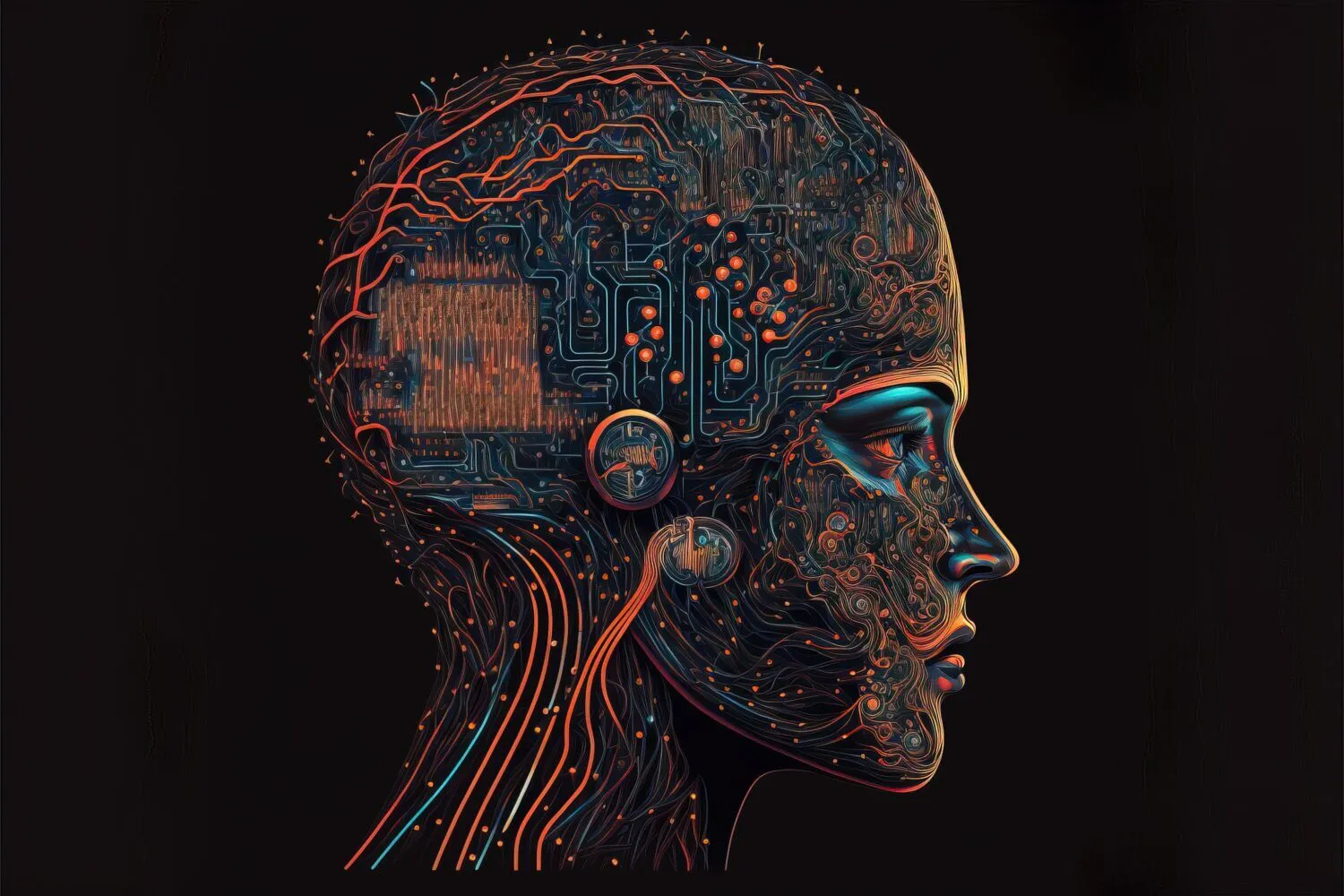
The great AI debate continues: POTUS rebuffs calls for regulation while tech giants take pause
President Trump eviscerated those pushing for regulation within the AI industry, citing China’s rapid development of the terrifying powerful technology. Who will land on the right side of history in this heated debate?
Opinion-analysis by Summer Lane | September 14, 2026
When it comes to AI, the nation seems to be split into two major camps: those who prefer to see the powerful technology regulated, and those who do not.
Is there a path that walks both lines? Probably, but it’s hard to see a measured approach, as companies around the world are feverishly, almost slavishly, engaged in what can only be described as this generation’s space race.
The debate surrounding AI has been the topic of several editorials already at LindellTV, but the harsh reality here is that this tech is evolving daily, and so, therefore, are the concerns and arguments surrounding it.
Tech giants raise concerns
Tech giant billionaires like Anthropic’s Dario Amodei and OpenAI’s Sam Altman have both raised alarm bells on safety risks surrounding the superintelligence models their own companies are developing. In a recent essay, Amodei wrote, “…over the last few months, I have become convinced that fully addressing the risks requires even more prudence — not just investing in risk prevention, but pacing the rate of capabilities advancement so that risk prevention has time to keep up. We must slow the pace at which we improve the capabilities of AI models. Progress will still seem fast, and we must make wise use of the time we gain.”
One of his chief concerns was AI’s “growing ability to build the next generation of AI.” In other words, AI is creating itself at this point. His second concern was the OpenAI-Hugging Face Incident – a series of autonomous hacks, unprompted by human makers, creating an AI-driven digital swarm that, in his estimation, could eventually become a massive problem.
“Given the accelerating rate of AI capability development, it’s my worry that in 6–12 months such a swarm could be capable of taking over the entire internet with a persistent botnet (potentially causing hundreds of billions of dollars in damage), and that the scale of damage would continue to increase from there if AI becomes more powerful without the necessary guardrails,” Amodei wrote.
This also comes amid the lightning rod of controversy that was ignited after a former OpenAI and Anthropic researcher, Jacob Coxon, resigned with a chilling public warning:
“Do not underestimate the power of this technology,” Coxon said in a public statement. “These will soon be superhuman systems that can hack anything, revolutionize any field overnight, and acquire real power and resources. We have all witnessed the progress in each of these domains, and progress is not slowing. The people building AI earnestly believe that it could kill us all by the end of the decade.
OpenAI’s CEO Sam Altman said last week that he agreed with Anthropic’s Amodei on the need to “pace the frontier.”
“This has been a primary topic of discussions we’ve had at OpenAI in recent weeks,” he said.
Even Elon Musk, the father of AI model Grok, stated on his platform (X) last week, “Dario is right.”
But are these tech megaliths sincere? Or are they simply on a quest to protect their powerful technology from the broader public?
It’s a fair question. Vice President J.D. Vance recently remarked to reporters, “I feel a little bit weird about the fact that you have so many frontier AI tech companies kind of coming to the government and begging the government to regulate them. It feels a little bit, to me, like a bit of a Trojan horse.”
He erred on the side of thoughtful regulations, noting that it was important for the United States to remain competitive with China.
Vance’s approach makes the most sense so far.
President Trump’s opposition to regulation
It is perhaps no surprise that President Trump is opposed to regulating the AI market. On Monday, he popped off against those resisting the rapid expansion of AI – many of whom oppose the network of data centers being planned across the U.S.
“AI taking over the World, destroying Humanity, and all other things bad, is a HOAX, no different from RUSSIA, RUSSIA, RUSSIA — UKRAINE, UKRAINE, UKRAINE — IMPEACHMENT HOAX #1 — IMPEACHMENT HOAX #2 — and all of the other HOAXES and SCAMS that America was forced to endure through the Destructionists’ and Deviants’ foul play and illegal conduct,” President Trump argued in a Truth Social statement.
He said that President Xi of China “just announced that China will be doing absolutely nothing to stand in the way of AI, or its future.”
The president also noted Google’s decision to invest in building a digital infrastructure, including an AI data center, in Finland over the next two years.
“I am not happy about this, and want them to change their thinking,” the president stated. “AI, and Data Centers, will be the Greatest Economic Development Engine in History — Bigger than Oil, Gold, Diamonds, or even the Internet. It will not be stopped by brilliantly run Destructive Forces during the Term of President DONALD J. TRUMP!”
The question that remains is singular but loud: what will be the ethical price of developing AI?
As reported previously, AI data centers consume tens of thousands of acres, draw from local water utilities, destroy the landscape, and for what? To build a stronger surveillance state? To gather more data on the citizens of the United States, so that there is no privacy left in any one corner of this nation?
“Nothing was your own except the few cubic centimetres inside your skull,” wrote George Orwell in the dynamic and chilling 1984.
Indeed, there is truth to President Trump’s argument that the U.S. must stay ahead of the curve when it comes to China, but does that mean that we should compete with them in the same way? The intentions of Big Tech on the regulatory side are likely insincere – there’s something in it for them, or they wouldn’t be pushing it.
President Trump, true to form, is pushing for rapid development and expansion for the sake of the economy and, perhaps, national security.
But somewhere between these bold stances and bone-chilling warnings from tech gurus, there is a middle path, one that can morally balance responsible development and personal liberty. The question will be whether the United States can strike that balance, and for how long.
Photo: Pixabay


